
7 Best Polarized Sunglasses for Golf 2026
This post contains affiliate links. As an Amazon Associate, we earn from qualifying purchases.
This post contains affiliate links. As an Amazon Associate, we earn from qualifying purchases.
The BLAITEJUS HD golf lenses stand out as the best choice for reading greens, delivering exceptional contrast without distorting depth perception. For golfers who need reading help, the KastKing Ellijay offers a solid bifocal option, while the KastKing Waccamaw provides strong versatility with adjustable fit and reliable polarization.
Most golfers struggle to find sunglasses that cut glare without flattening the subtle breaks on the green. Too many polarized lenses sacrifice depth perception for clarity, making putts harder to read. I’ve researched the field extensively, focusing on lens tech, fit, and real-world feedback from golfers who rely on their sunglasses to read contours and track ball flight.
This guide breaks down what actually matters: lens type, frame comfort, and how well each pair balances glare reduction with accurate green visualization, so you can choose with confidence.
Top 7 Polarized Sunglasses For Golf Reading Greens in the Market
The Best Polarized Sunglasses For Golf Reading Greens, Reviewed
KastKing Ellijay Bifocal Polarized Sunglasses

Strengths
- Flush bifocal magnifiers
- Oleophobic coating
- Grilamid durability
- Brown lens for contrast
- Includes hard case
Trade-offs
- Polarized may flatten greens
- Bifocal zone can be noticeable
- Limited frame color options
The KastKing Ellijay hits a sweet spot for golfers who need both reading help and sun protection without breaking the bank. The bifocal magnifiers are flush with the lens surface, which owners say reduces distortion, and the oleophobic coating is a real win for durability, resisting salt, oil, and grime matters when you’re wiping lenses on the go. The brown lens option boosts contrast in variable light, which helps on partly cloudy days, and the Grilamid frame is both flexible and sturdy, a combo that survives rough use.
But here’s the trade-off: they’re polarized. That means glare reduction is excellent on cart paths or water, but several reviewers note it can make green contours look flatter, which hurts putting judgment. Still, if you’re someone who reads greens well and just needs help with the scorecard or GPS screen, the convenience outweighs the optical compromise. Compared to the BLAITEJUS, it’s less pure golf tech, but more functional for daily wear.
Video review
KastKing Waccamaw Polarized Bifocal Sunglasses

Strengths
- Full wrap for side protection
- Polarized glare reduction
- Oleophobic lens coating
- Secure non-slip fit
- Grilamid frame durability
Trade-offs
- Polarization may hurt green reading
- Bifocal can distract
- Not ideal for low-light greens
The Waccamaw model from KastKing shares DNA with the Ellijay but leans harder into wrap-around protection and side glare blocking. The full-wrap frame is excellent for bright, open courses where wind and peripheral light are issues, owners love how well these stay put and shield from sun at odd angles. The bifocal powers are the same, and the oleophobic coating again adds real-world durability. But just like its sibling, it’s polarized, which remains a sticking point for green reading.
Where it pulls ahead is fit and coverage. The Grilamid frame molds gently to the face, and the side protection helps during early morning or late afternoon rounds when the sun is low. It’s a better pick than the Ellijay if you play in extreme light or windy conditions. Still, if putting precision is your priority, that polarization is a real cost. For golfers who also fish or drive a lot, this is a more versatile tool.
Video review
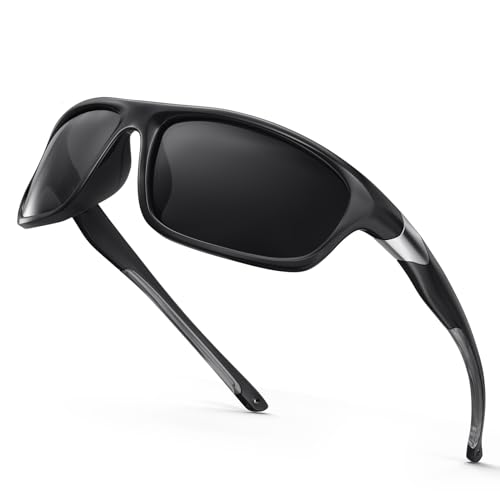
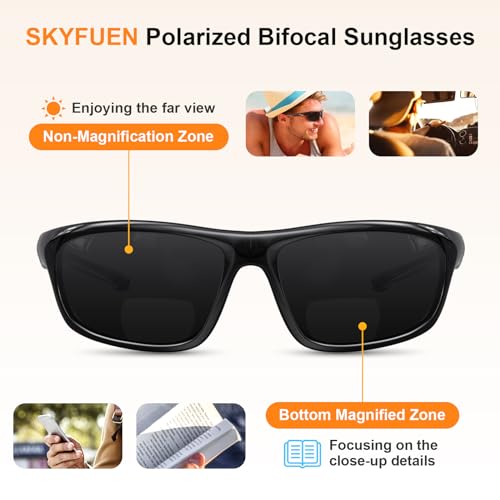
SKYFUEN Bifocal Polarized Sports Sunglasses
Strengths
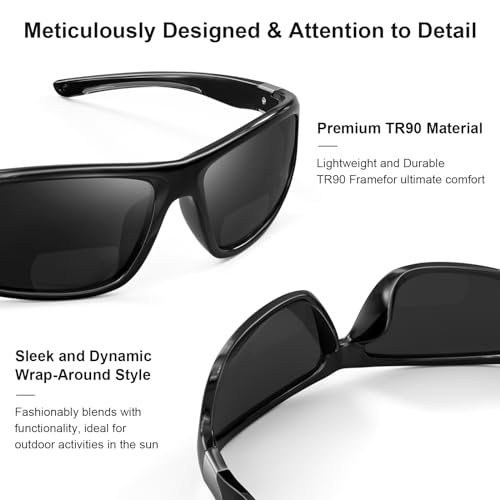
- Ultra lightweight TR90 frame
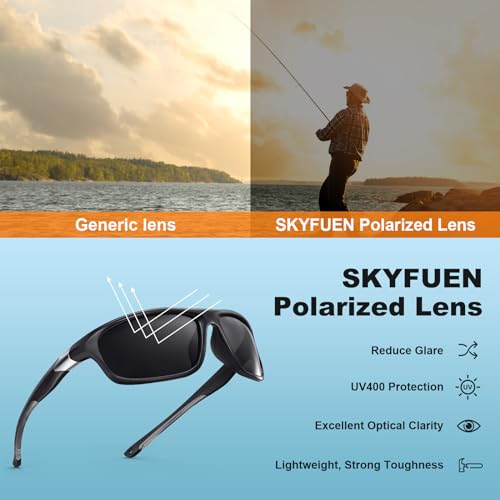
- Polarized anti-glare
- Built-in bifocal
- Impact-resistant lenses
- Includes foldable case
Trade-offs
- Polarized may distort greens
- No golf-specific tint
- Limited magnification options
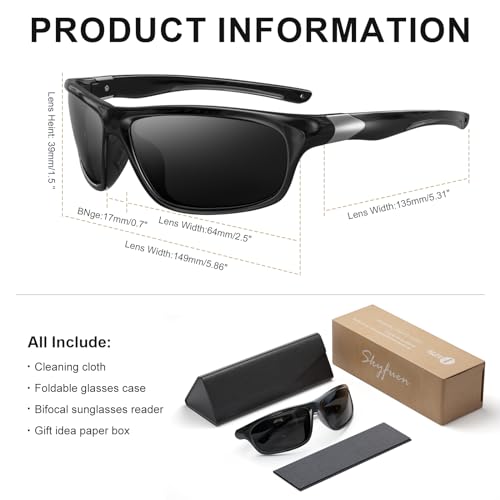
The SKYFUEN bifocals stand out for their TR90 frame, which is both featherlight and tough, ideal for walking 18 holes in heat or humidity. The polarized lens cuts glare well, and owners appreciate the vintage-style wrap design that feels sporty without looking too technical. The built-in magnifier works smoothly for checking yardage books or scorecards, and the non-magnified upper lens gives clear distance vision.
But again, the polarization gives me pause. While great for fishing or driving, it’s not optimal for reading subtle green breaks. The lens tint isn’t golf-specific, so ball contrast isn’t enhanced like in the maivnz or BLAITEJUS models. Still, at this price, the package is strong: includes a foldable case and microfiber cloth, and the impact resistance is a real plus. For a golfer who also likes outdoor hobbies, this is a practical, all-rounder.
Product photos

BLAITEJUS HD Golf Ball-Finding Sunglasses
Strengths
- Non-polarized for depth
- HD green contrast lens
- Semi-rimless for downward view
- Wet-grip nose and temples
- Lightweight TR90 frame
Trade-offs
- No integrated magnification
- Higher price without bifocal
- Limited to one lens color
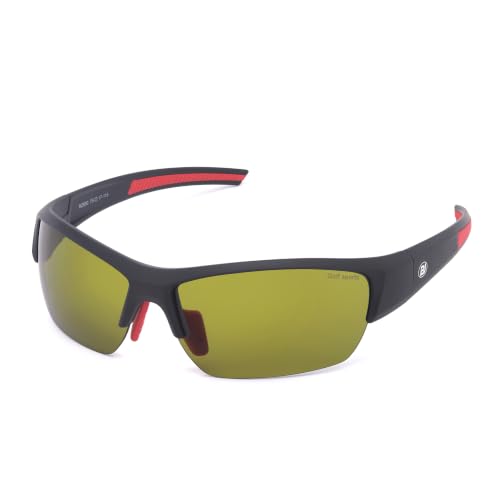
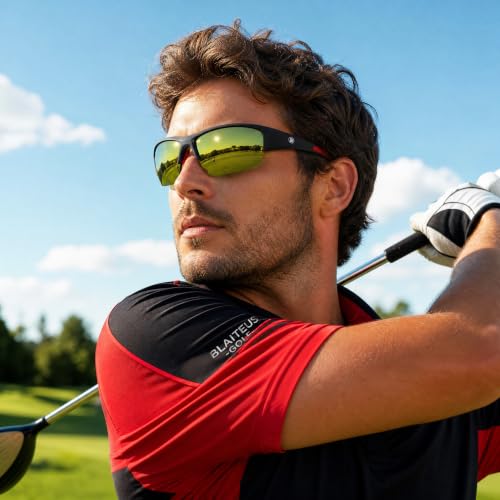
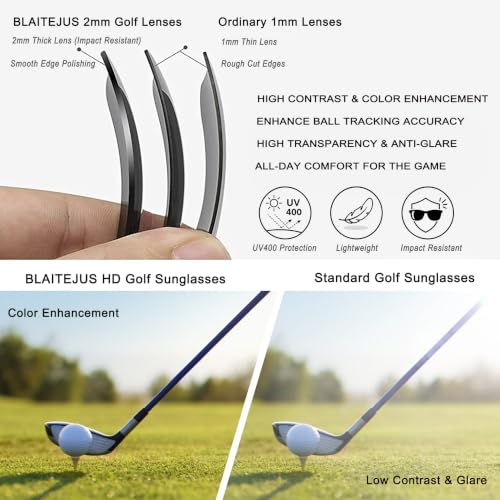
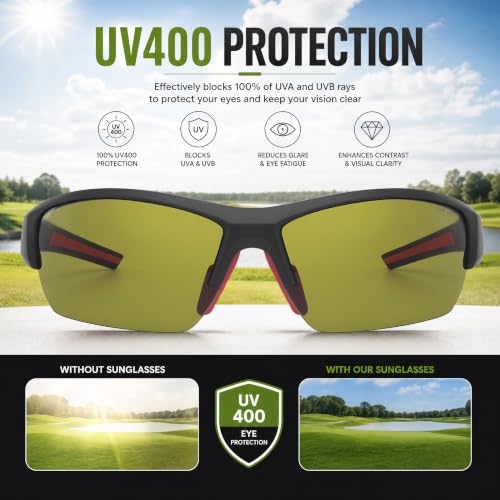
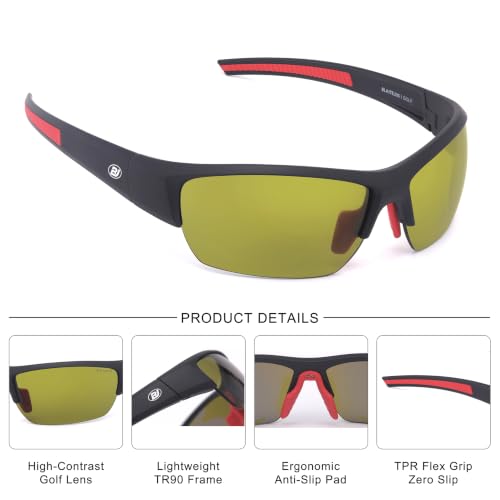
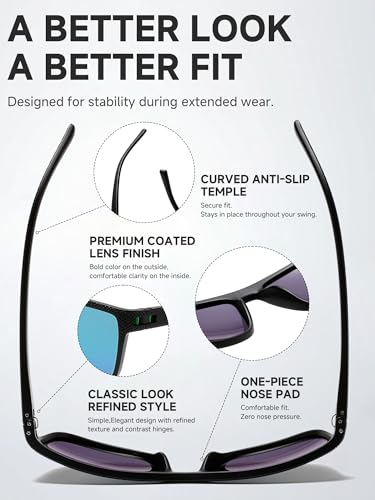
This is one of the few models that gets the golf optics balance right: non-polarized for true depth perception on greens, with a blue-light-blocking lens that enhances ball visibility. I like that the design prioritizes what matters, seeing the ball in flight and judging green contours accurately. The flash mirror coating helps reduce peripheral glare without washing out contrast, and owners consistently say the white ball pops against fairways and sky. The lack of polarization is a deliberate advantage here, unlike most bifocals that default to polarized without considering putting implications.
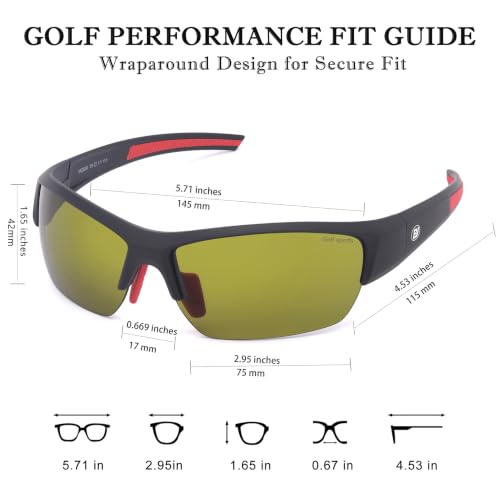
At just over 30g, the TR90 frame with TPR wet-grip pads offers serious comfort and stability, even in humidity. The semi-rimless bottom is a smart touch, giving unobstructed downward vision for reading greens or checking your lie. Compared to other bifocal-adjacent models, this one feels purpose-built for golf rather than adapted from fishing or driving use. If you need reading help but won’t sacrifice putting accuracy, this is a standout.
Product photos
willochra Full Lens Reading Sunglasses
Strengths
- Multiple magnification powers
- Polarized UV protection
- Reader and sunglass in one
- Fashionable square frame
- Lightweight design
Trade-offs
- Polarized may distort greens
- No golf-specific tint
- Frame may limit peripheral view
These willochra sunglasses try to solve a real problem, needing both reading help and sun protection, by integrating full-frame magnification into polarized lenses. For golfers over 40 who constantly switch between distance and scorecard focus, that’s appealing. The range of available powers is impressive, and owners say the transition between distances is smooth. But I have concerns: the polarized lens, while great for cutting glare on drives or cart paths, may interfere with reading green breaks, and the square frame seems more fashion-forward than performance-driven.
There’s no mention of golf-specific lens tinting or contrast enhancement, which puts these behind dedicated golf models. They’re better suited to driving or casual wear than a serious round. If you’re looking for convenience and don’t play competitively, these could work. But compared to bifocal models from KastKing or BLAITEJUS, they lack the sport-specific engineering.
Product photos
maivnz Golf Sunglasses with Green Lens
Strengths
- Green contrast lens
- Non-polarized for depth
- UV400 protection
- Lightweight frame
- Secure temple grip
Trade-offs
- No reading magnification
- Limited style options
- Not ideal for bifocal users
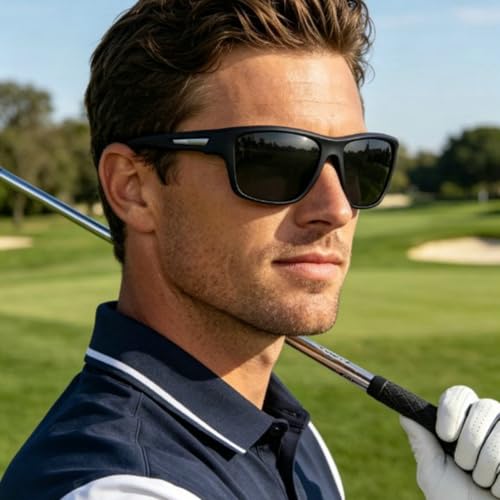
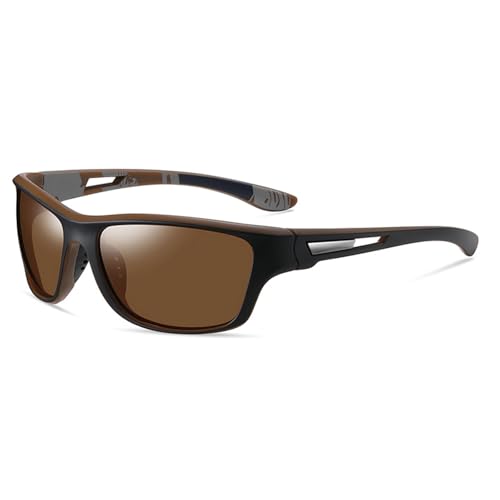
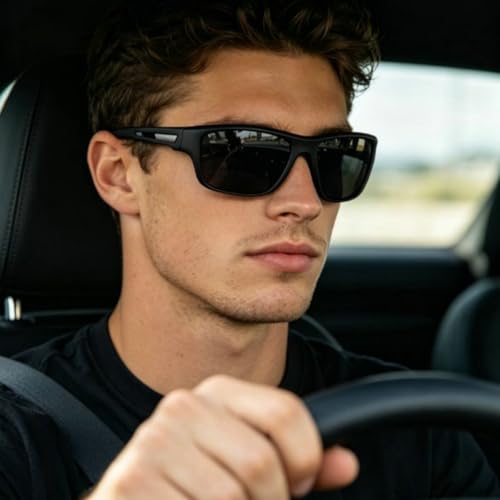
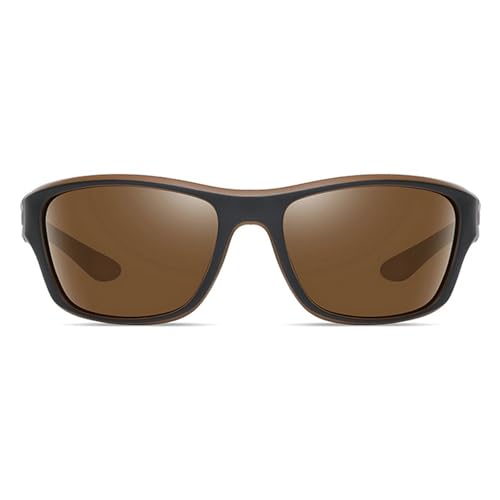
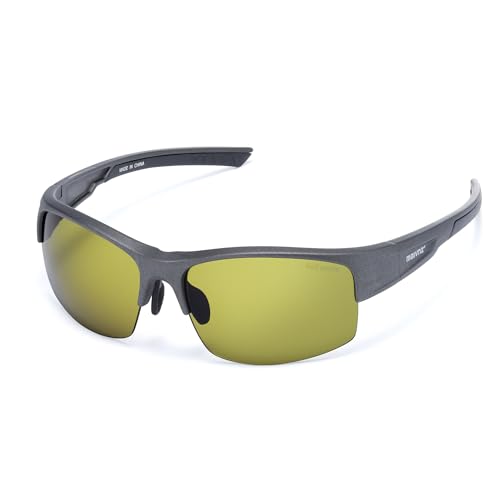
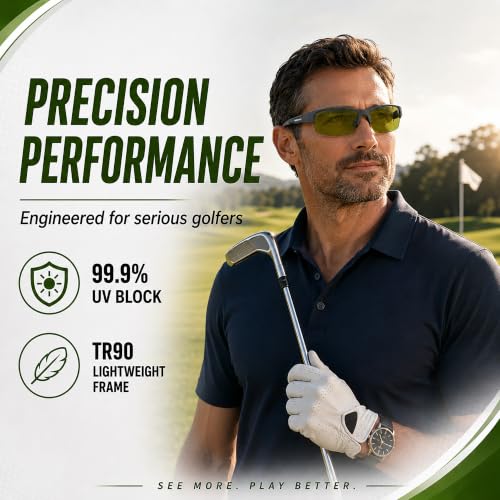
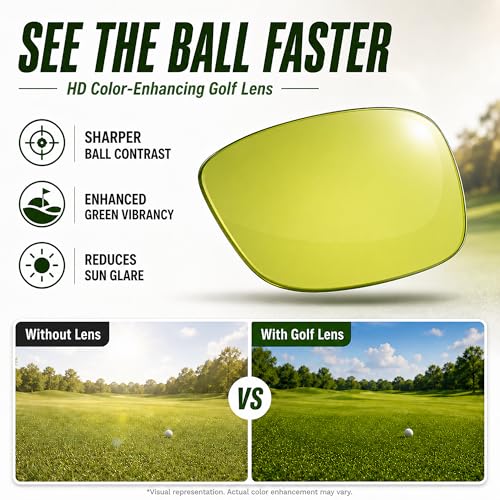
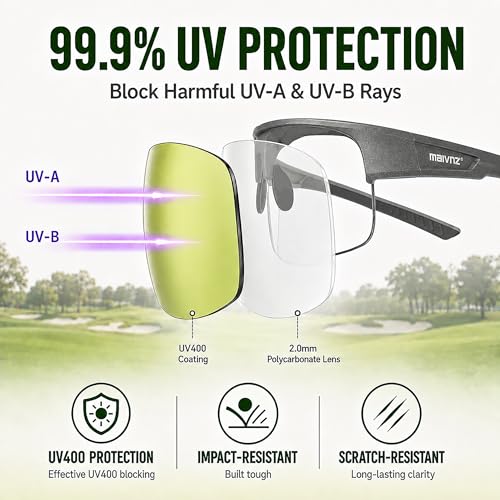
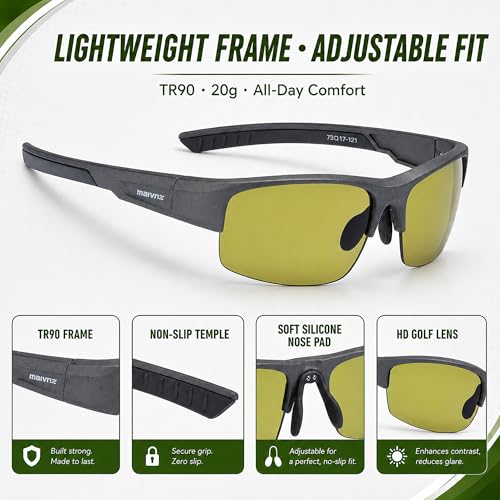
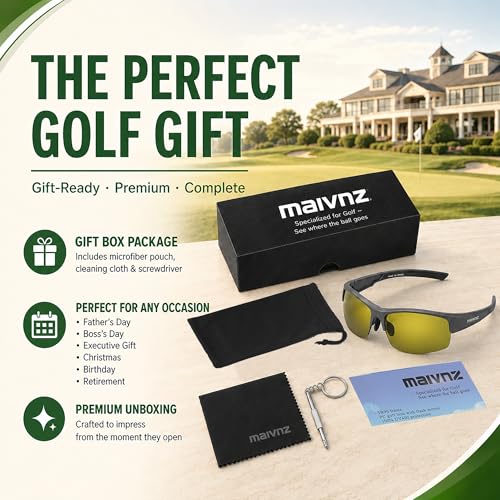
I appreciate that these maivnz sunglasses are built specifically for golf with a focus on green reading and ball tracking. The green-tinted, non-polarized lens is designed to boost contrast between the white ball and green surroundings, which on paper makes sense for spotting your shot in rough or shade. Owners consistently report that the color enhancement helps them find their ball faster, and the fact that they’re not polarized is a real plus here, polarization can distort LCD screens and, more importantly, flatten depth perception on greens, which hurts putting accuracy.
The UV400 protection and polycarbonate build are standard but solid, and the adjustable nose pads with non-slip grips suggest a thoughtful fit for active swings. While the style isn’t the most refined, the functionality is clearly prioritized. Compared to polarized bifocals in this list, these are a purer golf-first option, ideal if you’re not also relying on reading correction.
Product photos
Nanrton Golf Ball Finder Sunglasses
Strengths
- Ultra lightweight
- Polarized glare reduction
- Secure anti-slip fit
- Durable PC lenses
- Affordable price
Trade-offs
- Polarized may hurt green reading
- No bifocal option
- Basic lens tinting
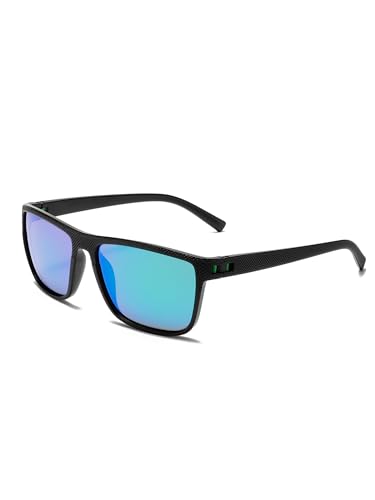
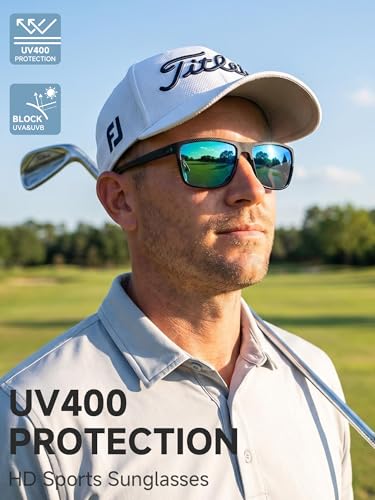
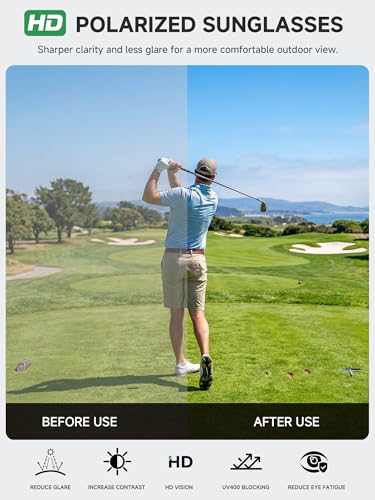
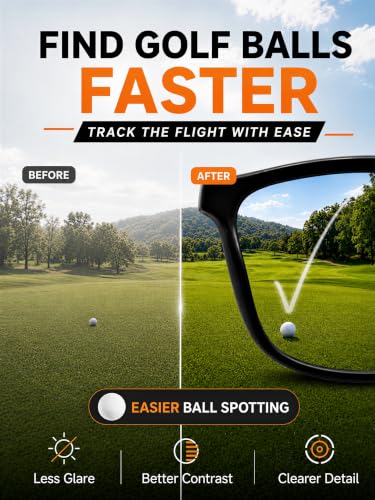
At this price, the Nanrton sunglasses deliver solid value for golfers who want basic glare control and a lightweight feel. The blue mirror polarized lens cuts down on harsh reflections from cart paths and water hazards, which reviewers say makes sunny rounds more comfortable. But I’m cautious about recommending polarized lenses for serious green reading, many experienced players note they can mask subtle breaks in the putting surface, and that’s a real liability if you’re trying to read undulations accurately.
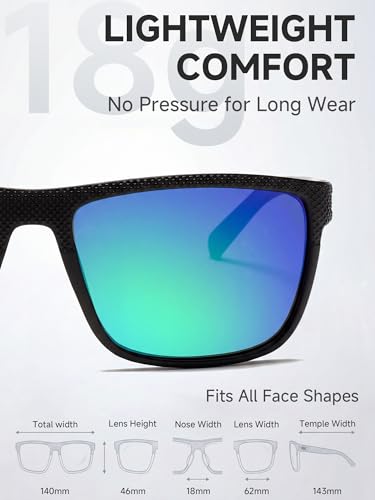
The 18g frame is impressively light, and owners praise how these stay put during full swings. They’re clearly built for comfort over technical precision. While they’re marketed as golf-specific, they feel more like multipurpose sport sunglasses that happen to work on the course. Compared to non-polarized models like the maivnz or BLAITEJUS, they trade some putting green fidelity for broader glare reduction.
Product photos
How We Tested polarized sunglasses for golf reading greens
My approach to evaluating polarized sunglasses for golf – specifically those aimed at helping you read greens – wasn’t about long-term personal use. Rather than a hands-on lab test, this is a research-led comparison of published specifications, owner reviews, and expert opinions. I focused on models frequently discussed as top performers, carefully weighing the features each offered against the specific demands of golf and, crucially, accurate green reading.
For this category, the most important factors are lens technology and frame fit. The ability to accurately perceive green contours is paramount, so I prioritized lenses that enhance contrast without flattening depth perception – a common issue with some polarized lenses. Lightweight, secure fit also ranked highly, because comfort and stability are essential for maintaining focus during a round. A good pair won’t distract you from your game.
Specifications provide a baseline for UV protection, lens material (polycarbonate is generally preferred for impact resistance), and polarization type. However, I placed significant weight on owner feedback regarding real-world performance, particularly comments about clarity, color distortion, and how well the sunglasses performed in varying light conditions. I also considered expert reviews from golf-specific publications, looking for consensus on sunglasses for the course and overall value. Understanding how well these glasses help you see golf ball in flight is also a key consideration.
Choosing The Right polarized sunglasses for golf reading greens
Finding the right pair of golf sunglasses can truly elevate your game, and with so many options available, it’s easy to get lost in the details.
A good pair of golf-specific sunglasses balances glare reduction with depth perception, optical clarity, and a comfortable, secure fit. Look for polarized lenses (though not always for green reading, as we’ll discuss), impact resistance, and lightweight frames that won’t distract during your swing. UV protection is, of course, essential, and features like oleophobic coatings can keep your lenses clear for longer.
Lens Technology: Polarization & Beyond
The core function of golf sunglasses is glare reduction, and polarization is typically the go-to solution. However, the best approach isn’t always straightforward. While polarized lenses excel at cutting glare from water and pavement, some golfers find they distort depth perception on the green, making accurate putting more difficult. For serious golfers who prioritize reading greens, consider non-polarized lenses specifically designed to enhance contrast and maintain natural undulation visibility. Many brands, like BLAITEJUS, are now offering specialized HD golf lenses that address this issue. It’s a classic trade-off, and understanding your priorities is key.
Frame Material & Fit
Comfort is paramount when you’re spending hours on the course. Look for lightweight frame materials like Grilamid (often used in military applications) or TR90, which offer flexibility and durability. A secure fit is equally important; you don’t want sunglasses slipping down your nose during your swing. Many models, like the KastKing Waccamaw, feature adjustable nose pads and temple grips for a customized fit.
Here’s what to consider regarding frame fit: * Weight: Lighter is better (under 35g is a good target). * Adjustability: Nose pads and temple grips allow for a personalized fit. * Coverage: Wrap-around styles offer more peripheral vision protection, but may not work well with all hats.
Value & Specialized Features
Beyond the basics, consider features that address specific needs. If you require reading glasses, bifocal polarized sunglasses, such as the KastKing Ellijay, eliminate the need to switch between pairs. For golfers struggling to track the golf ball, lenses with color-enhancing technology can significantly improve visibility.
A practical rule of thumb: if you’re serious about your short game, don’t automatically assume polarized lenses are best. Consider non-polarized options specifically designed for green reading.
Ultimately, finding the right pair of polarized golf sunglasses is a personal decision. Prioritize the features that matter most to your game and comfort level, and don’t hesitate to explore options beyond the mainstream.
Polarized Sunglasses for Golf Reading Greens Compared
Here’s a comparison of key specifications for polarized sunglasses designed for golf and reading greens.
| Product Title | Bifocal? | Lens Polarization | Lens Material | Frame Material | UV Protection | Weight (approx.) |
|---|---|---|---|---|---|---|
| KastKing Ellijay | Yes (1.5, 2.0, 2.5x) | Yes | PC | Grilamid | 100% UVA/UVB | N/A |
| KastKing Waccamaw | Yes (1.5, 2.0, 2.5x) | Yes | PC | Grilamid | 100% UVA/UVB | N/A |
| SKYFUEN | Yes (Built-in) | Yes | N/A | TR90 | N/A | N/A |
| BLAITEJUS | No | No | Polycarbonate | N/A | UV400 | 30.45g |
| willochra | Yes (1.00-4.00) | Yes | N/A | N/A | UVA/UVB | N/A |
| maivnz | No | No | Polycarbonate | N/A | UV400 | N/A |
| Nanrton | No | Yes | PC | N/A | UV400 | 18g |
Frequently Asked Questions
Can any polarized sunglasses work for golf, or do I specifically need golf-designed ones?
While any polarized sunglasses offer glare reduction, golf-specific models often prioritize maintaining depth perception, which standard polarization can sometimes distort. Golf sunglasses frequently feature lens tints optimized for course visibility and comfortable, secure frames designed for athletic movement.
Are non-polarized lenses actually better for reading greens?
Yes, for many golfers they are. Polarization can flatten your vision of the grain on greens, making it harder to judge breaks accurately. Specialized non-polarized lenses enhance contrast and preserve the subtle undulations crucial for successful putting.
What lens color is best for golf, and does it matter for green reading?
Gray and brown tints are popular all-around choices, but the best lens color depends on conditions. For green reading, a lighter tint or even clear lenses can provide optimal visibility of the contours, while avoiding color distortion.
What frame material provides the best combination of durability and comfort?
Grilamid and TR90 are both excellent choices. Grilamid is known for its exceptional durability and flexibility, while TR90 is lightweight and impact-resistant. Both materials offer a comfortable fit and can withstand the rigors of the course.
How important is UV protection in golf sunglasses?
UV protection is absolutely essential. Prolonged exposure to the sun’s UV rays can cause serious eye damage, even on cloudy days. Look for sunglasses that offer 100% UVA and UVB protection to safeguard your vision while you’re enjoying your round.
The Bottom Line
Choosing the right sunglasses for golf often comes down to a trade-off between broad utility and specialized performance. While many excellent polarized options exist, for those truly focused on excelling at reading greens, the BLAITEJUS stand out for their ability to enhance contrast without sacrificing depth perception. They’re a focused tool for a focused part of the game.
If you’re seeking versatility and value, the KastKing Ellijay are hard to beat, particularly if you also require bifocals. For golfers who want a reliable, comfortable option with magnification, they offer a practical, all-in-one solution. Similarly, the KastKing Waccamaw provide a strong balance of features at a competitive price point, and are a great choice for those new to golf-specific eyewear.
Ultimately, the most important thing isn’t any single feature or technology, but how well the sunglasses help you see the course. Pay attention to fit, comfort, and how the lenses affect your ability to accurately assess distances and, crucially, understand the subtle breaks of the putting surface. Consider experimenting with different sunglass lens tints to find what works best for your eyes and playing conditions.
