
8 Best Practice Golf Balls for Backyard 2026
This post contains affiliate links. As an Amazon Associate, we earn from qualifying purchases.
This post contains affiliate links. As an Amazon Associate, we earn from qualifying purchases.
The Full Choice 20 Pack Limited-Flight Golf Balls stand out as the best overall for backyard use, offering reliable short flight and solid feedback, while the Faswin 100-Pack gives a durable, budget-friendly option for high-volume practice. For those wanting a slightly more realistic feel without the risk, the Callaway HX Soft Flight foam balls are a strong versatility pick.
If you’re like me and always looking to sharpen your game between rounds on the course, practicing at home makes sense, but only if you’ve got the right ball for your space. Most backyard setups don’t allow for full swings or long carries, so choosing a ball that’s safe, durable, and gives meaningful feedback is key.
This guide covers the top practice golf balls suited for backyard use, selected by analyzing specs, owner experiences, and performance factors like flight distance, material, and feel. I focused on models that balance realism and practicality so you can train effectively without risking a neighbor’s window.
Top 8 Practice Golf Balls For Backyard in the Market
The Best Practice Golf Balls For Backyard, Reviewed
Bac-kitchen 40 Pack Foam Golf Balls

Strengths
- Good quantity
- Slight compression feel
- Includes tees and bag
- Soft, pet-safe material
- Bright colors
Trade-offs
- Moderate durability
- Flight less consistent
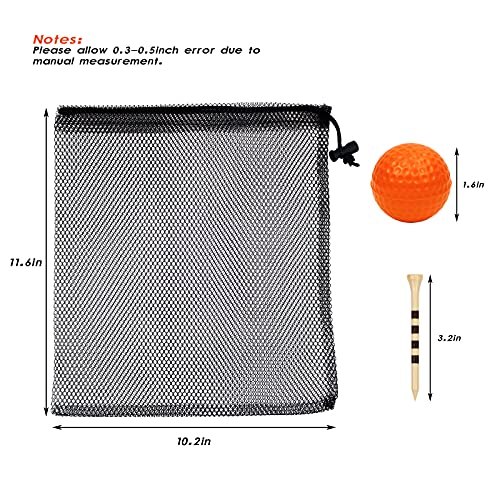
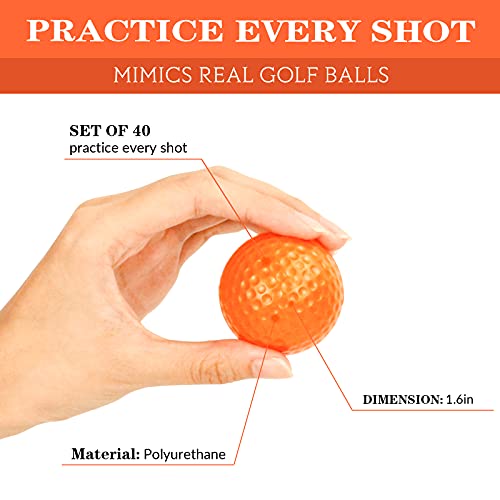
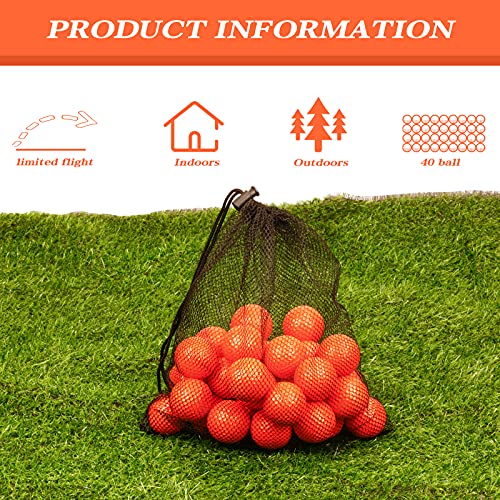
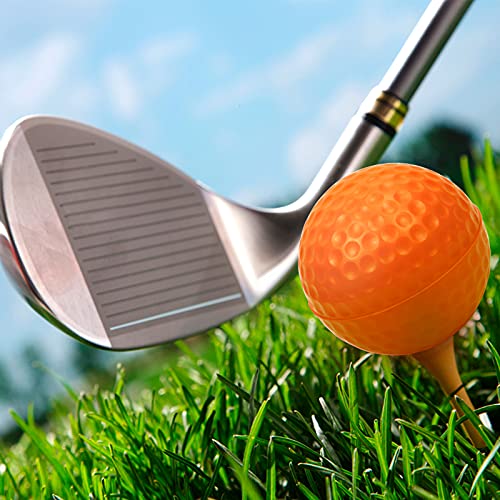
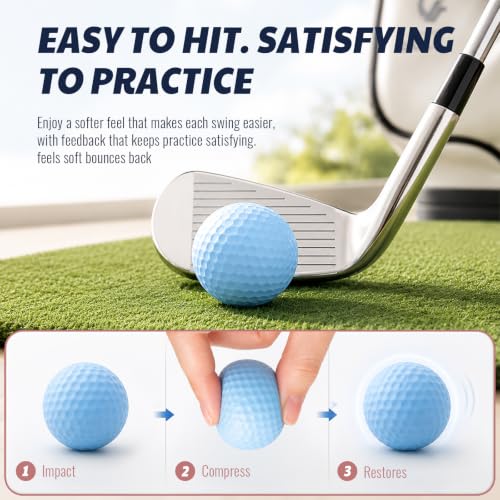
This pack hits a sweet spot: 40 balls, tees included, and a storage bag, all at a midrange price. The PU rubber material gives a slight compression at impact, which owners describe as a satisfying ‘pop’ that feels closer to a real ball than most foam versions. That, combined with the 1.6-inch size, makes it a strong all-rounder for both adults and kids.
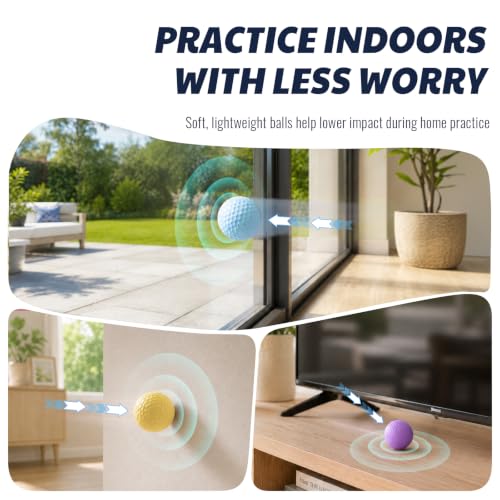
It’s not the most durable or the most realistic, but the versatility stands out. You can chip, swing, or let the dog play with them, no real risk of damage. Compared to heavier plastic balls, these are quieter and softer on surfaces, which helps when practicing near windows or indoors.
Product photos

Callaway HX Soft Flight Foam Golf Balls

Strengths
- Trusted brand quality
- HEX dimple aerodynamics
- Soft foam, safe indoors
- Comes with carry bag
- High-visibility color
Trade-offs
- Only 9 balls included
- Lightweight, minimal swing feedback
It’s hard to ignore the brand credibility here, Callaway’s HEX dimple design isn’t just marketing, it’s a real aerodynamic feature carried over from their premium balls, and owners say it delivers slightly more consistent flight than generic foam balls. At just 9 balls, this isn’t a high-volume option, but the included mesh bag makes it easy to toss in a golf bag or travel kit.
The foam is soft enough for safe indoor use, and the bright orange hue is easy to track. While it doesn’t replicate swing weight, it’s one of the better choices if you want a trusted name and a ball that behaves predictably in tight spaces. Compared to cheaper packs, these feel more refined, though not necessarily more effective for skill building.
Video review
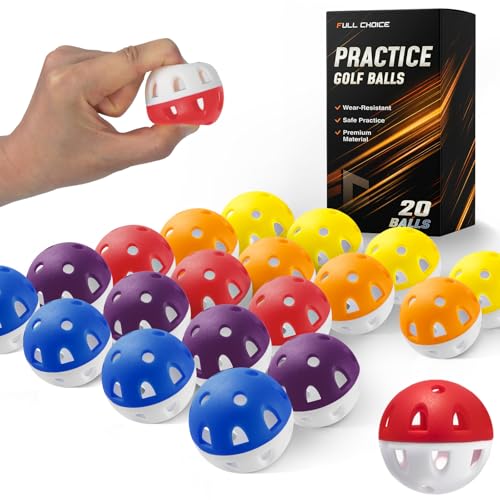
Full Choice 20 Pack Limited-Flight Golf Balls
Strengths
- Very quiet impact
- Weather-resistant material
- High-visibility colors
- Durable for foam
- Limited flight
Trade-offs
- Too light for swing training
- No realistic feel
If you’re in an apartment or have thin walls, the quiet performance of these EVA balls is a real win. Owners consistently praise how little noise they make when struck, even with irons, making them one of the least disruptive options for garage or indoor use. The wear-resistant design also holds up well in sun and rain, so they won’t degrade quickly if left outside.
They fly predictably for a foam-style ball, and the bright colors make them easy to spot. At 20 balls, it’s a solid volume for regular use, and the soft material won’t damage property. Compared to heavier plastic balls, they lack swing weight, but that’s the trade-off for peace and quiet.
Video review
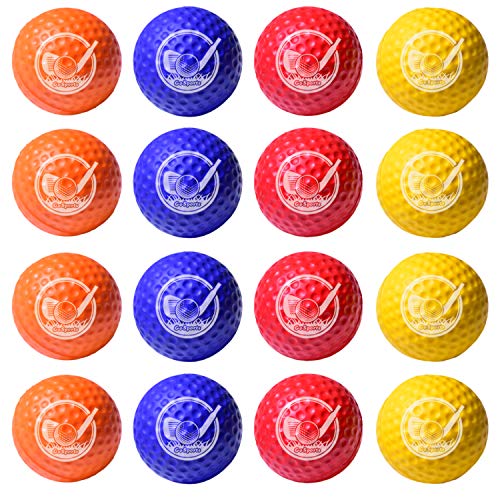
GoSports 16 Pack Foam Golf Practice Balls
Strengths
- Realistic dimple pattern
- Good flight tracking
- Durable foam
- Includes storage tote
- Safe for walls and windows
Trade-offs
- Only 16 balls
- No swing weight
These 16 foam balls are built for indoor precision. The realistic dimple pattern isn’t just cosmetic, owners note it helps with tracking flight and improving shot shape, even in short spaces. The included storage tote is a small but appreciated touch, keeping things tidy in a home gym or basement setup.
They don’t offer weighted feedback, but for working on swing path, alignment, and tempo in a simulator or tight room, they’re among the most reliable. Compared to cheaper foam sets, these hold their shape longer and resist flattening. They’re not for backyard driving, but for controlled indoor drills, they’re hard to beat.
Product photos


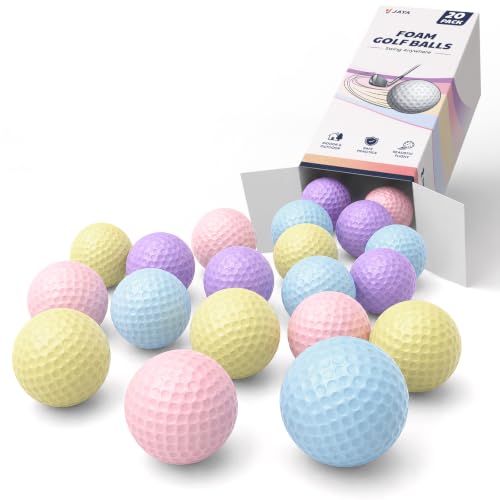
JAYA 20 Pack Macaron Foam Golf Balls
Strengths
- Low cost
- Macaron color variety
- Familiar size and look
- Soft impact
- Good for kids
Trade-offs
- Foam degrades faster
- Minimal swing feedback
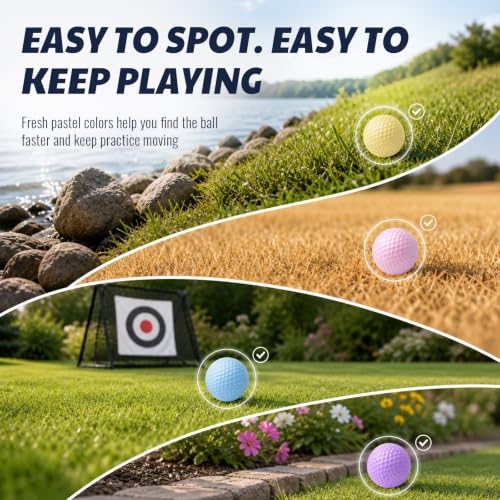
At under $6, this 20-pack in soft macaron colors offers surprising value, not just in price, but in usability. The 41mm size and dimpled surface give a familiar look at address, which helps maintain proper setup and alignment during practice. Owners appreciate how the colors make it easy to spot balls in grass or on carpet, and the limited flight keeps things safe in tight yards.
It’s not the most durable or performance-focused option, but for casual reps, family play, or keeping kids engaged, it’s a fun, functional pick. Compared to single-color packs, the variety adds a lighthearted touch that makes practice feel less like work.
Product photos
Faswin 100 Pack Plastic Practice Golf Balls

Strengths
- 100-ball volume
- Hollow design for true flight
- Durable polyurethane
- Good for driver practice
- Simulates real ball flight
Trade-offs
- Harder impact, not indoor-safe
- Louder than foam
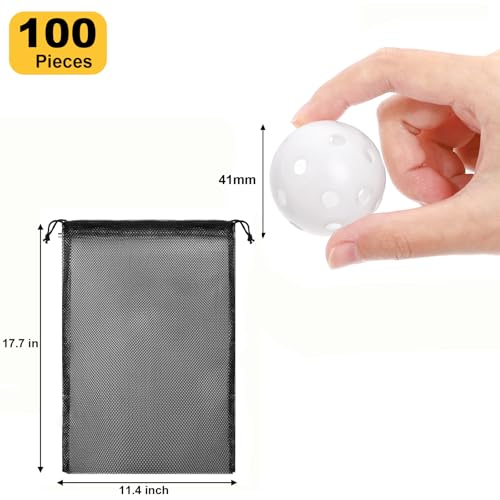
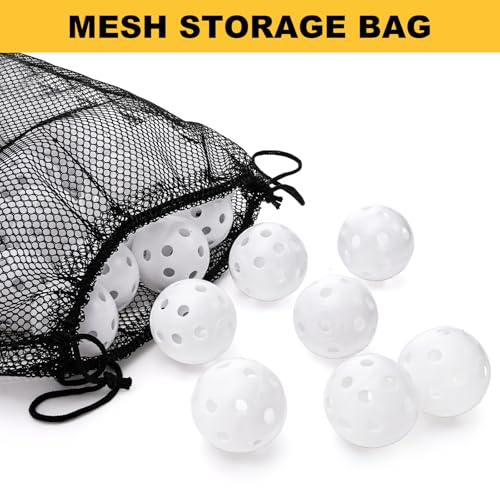
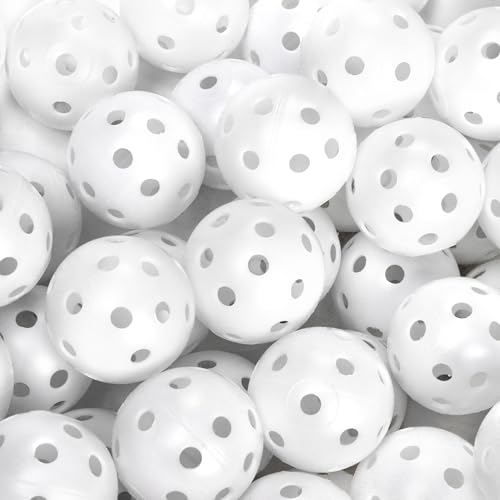
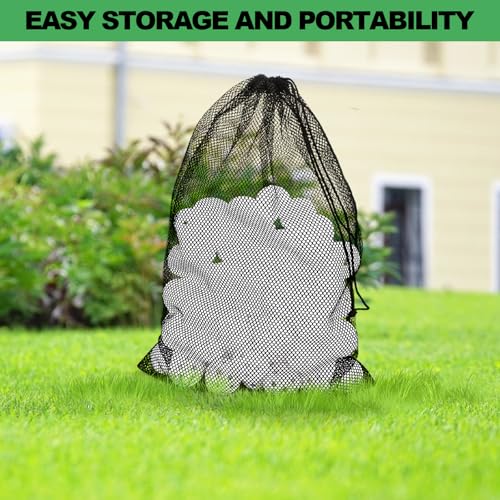
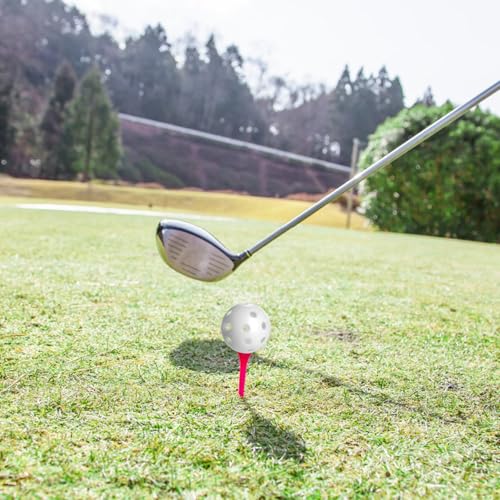
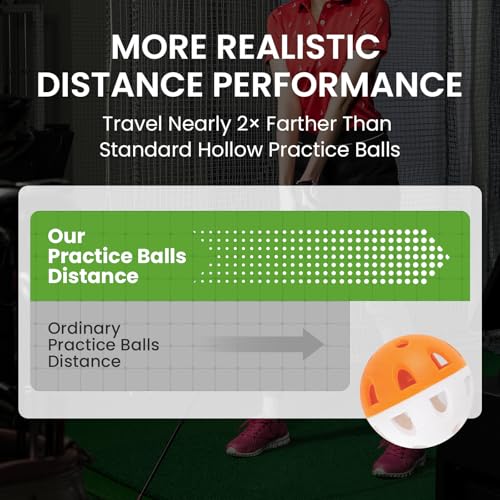
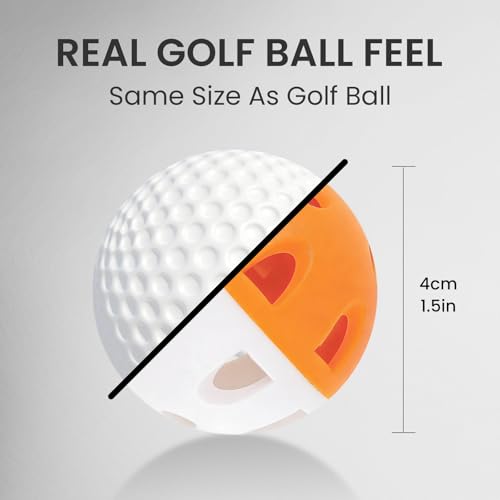
When volume matters, this 100-pack of hollow plastic balls is unmatched. The 4g weight and 26-hole airflow design aim to simulate real ball flight without the distance, owners say they fly straighter and farther than foam, making them ideal for backyard driving practice. The included mesh bag lets you dump and go, which is perfect for repetitive long-game drills.
They’re not quiet or soft, so indoor use is risky, but for outdoor swing speed work or driver practice, they deliver better flight realism than most. Compared to foam, they’re louder and harder on surfaces, but that’s the trade-off for more authentic behavior.
Product photos
CHAMPKEY 16 or 32 Pack Foam Golf Balls

Strengths
- Better spin simulation
- Weighted for realistic feel
- True dimple pattern
- Good flight consistency
- Durable compressed foam
Trade-offs
- Higher price per ball
- Limited availability
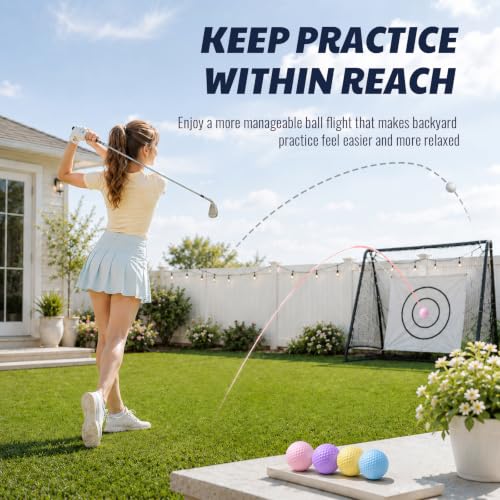
With a weight range of 8.5–10g and 336 surface holes, these claim to deliver true spin and accurate distance, on paper, that’s ambitious for a foam ball. Owner feedback suggests they do offer better spin response than most foam options, especially on partial swings, making them a standout for players serious about short-game feel. The limited flight (50–65 yards) keeps them backyard-friendly.
They’re not going to replace range balls, but for working on pitch trajectories or low-iron strikes, they come closer to real ball behavior than many competitors. Compared to lighter foam sets, these feel more substantial at impact, which helps build better contact awareness.
Product photos


Bramasole Weighted Practice Golf Balls 50-Pack
Strengths
- Added weight improves tempo
- 50-pack with storage bucket
- High-visibility colors
- Durable thick shell
- Safe for indoor use
Trade-offs
- Not true flight simulation
- No spin feedback
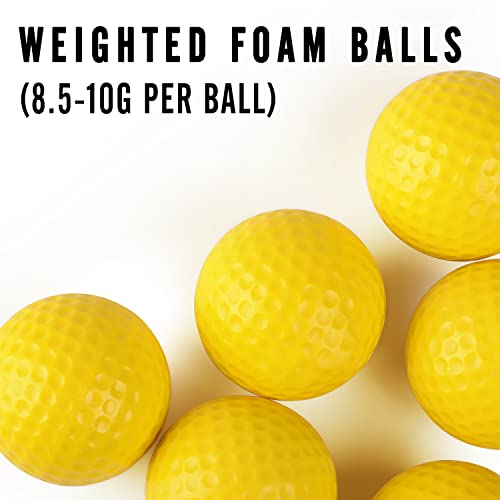
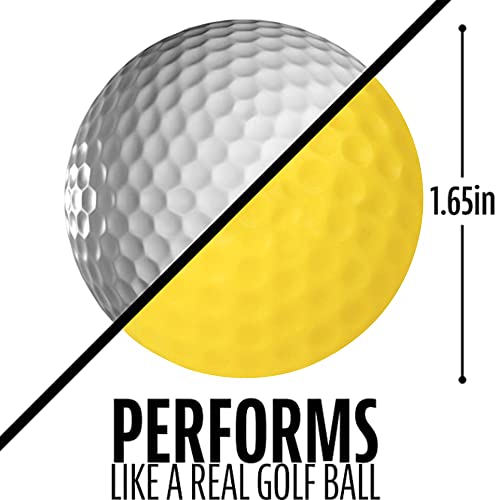
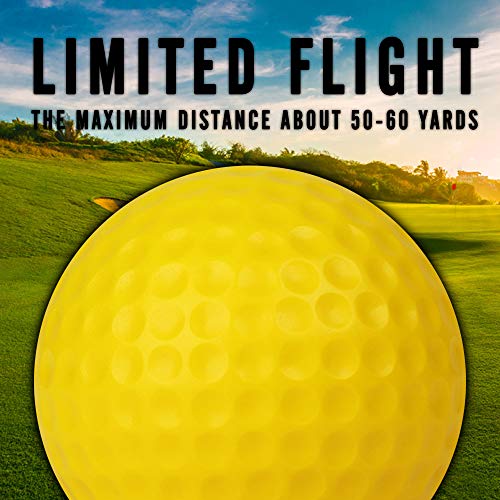
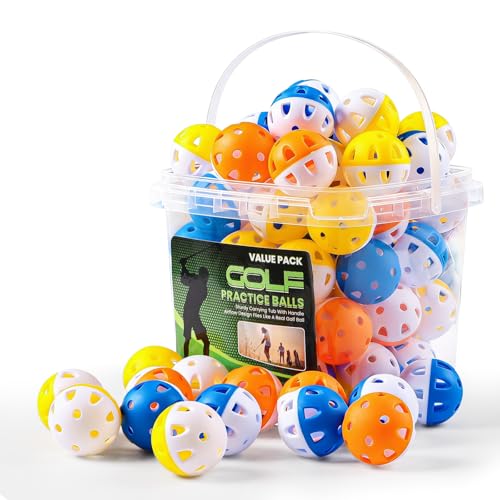
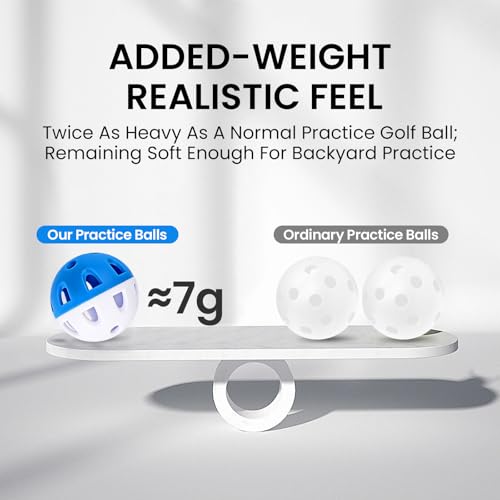
The added weight in these 7g plastic balls stands out immediately on paper, and owners consistently report it helps reinforce a smoother, more controlled swing tempo. That’s rare in budget backyard balls, most of which feel too light to offer meaningful feedback. The 50-pack with a bucket is a smart setup for serious daily reps, especially if you’re drilling fundamentals and want to avoid constant ball retrieval.
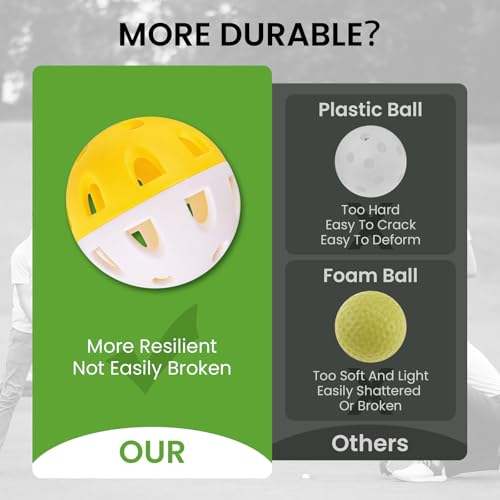
High-visibility colors and a thick-shell build make these surprisingly resilient across surfaces, from turf to garage floors. While they don’t fly like real balls, that’s not the goal here, this is about rhythm and repetition. Compared to ultra-light foam options, these deliver a more grounded feel, though they’re still not ideal for simulating short-game spin.
Product photos
How We Picked These practice golf balls for backyard
My approach to evaluating practice golf balls centered on a careful comparison of published specifications and features, combined with a thorough review of owner feedback and insights from golf publications. Rather than a hands-on lab test, this is a research-led comparison, ranking options against key criteria for home and backyard use. I weighed the pros and cons of each model based on real-world user experiences.
For this category, the most important factors were durability and realistic feel. A ball needs to withstand repeated hits without cracking, and ideally, provide some level of feedback that mimics a true golf ball strike. Limited flight distance is also crucial, as most backyard setups don’t allow for full-distance swings. Choosing foam practice balls that balance these elements delivers the most effective training experience.
Product specifications reliably indicate size, weight, and materials. However, I placed greater importance on owner reports regarding distance control, how the ball holds up to repeated use, and the quality of the “feel” upon impact. Expert reviews helped validate claims about dimple patterns and aerodynamic design. For those completely new to the game, considering golf balls for beginners alongside these practice options can also accelerate skill development.
How To Choose The practice golf balls for backyard
Choosing the right practice golf balls can dramatically improve your game, even when you can’t get to the course.
A truly useful practice golf ball balances realistic feel with safety and durability. Consider the material (foam, plastic, or a hybrid), the flight characteristics (limited or full), and whether the ball provides feedback that mimics a real golf shot. Look for dimple patterns intended to improve aerodynamics and visibility, and don’t underestimate the convenience of a storage solution.
Material Matters Most
The material of a practice golf ball dictates how it feels coming off the clubface and where you can safely use it. Foam golf balls – like those from JAYA or GoSports – are fantastic for indoor use and won’t damage furniture, but they generally don’t provide the same feedback as a real golf ball. Plastic practice golf balls, like the Faswin 100-pack, offer more durability and a slightly more realistic feel, but they can be less forgiving on hard surfaces. Ultimately, consider where you’ll be practicing most often and select a material accordingly.
Flight Characteristics and Distance
How far a practice ball flies is a huge factor. If you’re confined to a small backyard, you’ll want limited-flight balls like the Full Choice 20-pack. These are designed to travel a shorter distance, minimizing the risk of hitting something (or someone!). Conversely, if you have a larger open space, you might prefer balls that simulate a more realistic flight path, like the Callaway HX Soft Flight foam golf balls. Here’s a quick guide:
- Short Distance (under 50 yards): Ideal for indoor use or very small backyards.
- Medium Distance (50-80 yards): Good for average-sized backyards and working on approach shots.
- Long Distance (80+ yards): Best suited for open fields or driving ranges where space isn’t an issue. This isn’t common in a dedicated “practice” ball, but some can achieve this.
A good rule of thumb: if you’re practicing at home, prioritize safety and minimizing damage over replicating a full-power drive.
Value, Durability, and Extras
Spending a fortune on golf balls for practice doesn’t guarantee improvement. Consider the number of balls included in a pack and the durability of the material. The Bramasole 50-pack offers excellent value, while the CHAMPKEY balls aim for a more realistic swing feel. Also, look for extras like a storage bag or tees, as these can add convenience. If you’re serious about indoor training, exploring foam golf balls and indoor foam balls designed for limited space is a smart move. Remember, consistently hitting balls for training purposes is more important than having the most expensive equipment.
Practice Golf Balls for Backyard Compared
Here’s a comparison of key specifications for various practice golf balls designed for backyard use.
| Product Title | Quantity | Material | Diameter (in) | Weight (oz) | Flight | Carry Bag |
|---|---|---|---|---|---|---|
| Bac-kitchen 40 Pack Foam Golf Balls | 40 | PU Rubber | 1.6 | N/A | Limited | Yes |
| Callaway HX Soft Flight Foam Golf Balls | 9 | Foam | N/A | N/A | Soft | Yes |
| Full Choice 20 Pack Limited-Flight Golf Balls | 20 | EVA | 1.65 | 0.25 | Limited | No |
| GoSports 16 Pack Foam Golf Practice Balls | 16 | Foam | N/A | N/A | Limited | Yes |
| JAYA 20 Pack Macaron Foam Golf Balls | 20 | Foam | 1.6 | N/A | Limited | No |
| Faswin 100 Pack Plastic Practice Golf Balls | 100 | Polyurethane | 1.6 | 0.14 | True Spin | Yes |
| CHAMPKEY 16 or 32 Pack Foam Golf Balls | 16/32 | Compressed Foam | N/A | 0.3-0.35 | Limited | No |
| Bramasole Weighted Practice Golf Balls 50-Pack | 50 | N/A | N/A | 0.25 | Safe | Yes |
Frequently Asked Questions
What’s the biggest difference between foam and plastic practice golf balls?
Foam balls are much softer and ideal for indoor use or where damaging surfaces is a concern, while plastic balls offer greater durability and a more realistic feel for simulating actual golf shots. Plastic balls can be harder on surfaces and aren’t always appropriate for confined spaces.
Are weighted practice golf balls beneficial for building swing speed?
Yes, weighted practice golf balls, like the Bramasole 50-Pack, can help increase swing speed and strength through added resistance during practice. The extra weight forces your muscles to work harder, potentially leading to gains in clubhead speed.
Can I use practice golf balls on a real putting green?
Generally, yes, but it depends on the green’s material and your local course rules. Some courses may restrict their use to protect the surface, and even softer foam balls can leave scuff marks on delicate synthetic putting greens.
How do I choose the right size practice golf ball?
Most practice golf balls adhere to standard golf ball sizing (1.68 inches in diameter), but slight variations exist. For general practice, the size isn’t critical, but if you’re working on specific club fitting or technical drills, using balls closest to the size of best golf balls is recommended.
What’s the lifespan of a foam practice golf ball?
The lifespan varies greatly depending on frequency of use and surface contact. Expect a foam ball to last anywhere from a few weeks to several months of regular use. Owner feedback suggests JAYA and GoSports balls tend to hold up well, but consistent, hard impacts will eventually cause wear and tear.
The Bottom Line
Ultimately, choosing practice golf balls comes down to balancing realistic feel with practicality and safety. For the overall best experience, especially if you’re looking to refine your swing with a ball that behaves like a real one, I recommend the Faswin 100-pack. They offer a good blend of durability and responsiveness, and the sheer quantity ensures you won’t be constantly retrieving errant shots.
If your needs are more specific, there are excellent options to suit. For those prioritizing indoor practice and safety, the JAYA 20-pack Macaron foam golf balls are a fantastic choice. And if you are setting up a dedicated practice space, don’t forget to consider investing in some quality practice nets to contain your shots and protect your surroundings.
At the end of the day, the most expensive golf ball won’t fix a flawed swing. Focus on consistency, proper technique, and finding a ball that allows you to feel the impact and control your shots – and consider buying balls in bulk to keep costs down as you log those practice hours.
