
Compare Strategic, Penal, and Heroic Golf Course Design Here
This post contains affiliate links. As an Amazon Associate, we earn from qualifying purchases.
This post contains affiliate links. As an Amazon Associate, we earn from qualifying purchases.
Strategic, penal, and heroic golf design are the three foundational schools of course architecture. Strategic design presents multiple routes with varying risk and reward, penal design severely punishes any deviation from a single line, and heroic design offers a stark choice between a safe, long route and a risky, shorter one for a major advantage. Most great courses are a blend, but understanding which style dominates a hole changes how you play it.
That classification isn’t just academic. It’s the language of the game’s strategy. A penal hole asks a single yes-or-no question of your skill. A heroic hole presents a gamble you can choose to accept or decline. A strategic hole starts a conversation about your strengths, the conditions, and your nerve.
What follows is a breakdown of each school’s DNA: the philosophy behind it, the physical features that define it, and the exact holes where you’ve felt its effect. By the end, you’ll read a course map not as a list of distances, but as a series of strategic conversations.
Key Takeaways
- Penal design is a pass/fail test with one correct line and severe punishment for misses; it’s memorable in small doses but frustrating as a steady diet.
- Heroic design is a calculated gamble, offering a clear risk/reward trade-off, usually on a par-5 or a dogleg, where longer carries over trouble yield a significant scoring advantage.
- Strategic design is a multi-option puzzle that rewards course management and shot-shaping, using width, angles, and carefully placed hazards to create multiple valid paths to the hole.
- No course is purely one style. The best architects, from the Golden Age of architecture to modern minimalists like Tom Doak, blend all three to test every facet of your game.
- Your handicap dictates which style is hardest. High-handicappers struggle most with penal design’s forced carries, while better players are most tested by strategic design’s demand for precise decision-making.
What Are the Three Schools of Golf Course Design?
The terms “strategic,” “penal,” and “heroic” originated as a way to categorize how hazards influence play. They are lenses, not rigid boxes. As the European Institute of Golf Course Architects notes, well-versed players often debate which category a specific hole belongs to. The iconic 17th at the Old Course at St. Andrews, for instance, blends a heroic drive option with a strategically complex approach guarded by a penal bunker.
The three schools describe a hazard’s relationship to the player. A penal hazard simply punishes. A strategic hazard influences a decision. A heroic hazard dares you to challenge it for a tangible reward.
This framework is the grammar of golf course architecture. Knowing it lets you move beyond “hit it there” to understanding why that spot is the target. It turns a random collection of bunkers and doglegs into a coherent, and often beautiful, test of golf.
Strategic Design: The Game of Angles and Options
Strategic design is the oldest and most cerebral school. Its core principle is width and choice. The fairway is often generous, but the ideal line is narrowed by cleverly placed hazards that reward a specific angle of approach. Think of a bunker on the inside corner of a dogleg. You can play safe out to the right for a longer, clearer second shot, or you can challenge the bunker to shorten the hole and open up the green.
The genius is in the options. A purely strategic hole has no single “correct” play. The best choice depends on your driving distance, confidence with a certain club, the day’s wind, and your score. It rewards players who can think their way around the course, not just muscle it. This is where the foundational golf course design principles of width, angles, and optionality are most clearly on display.
Why it works: Strategic design engages the golfer’s mind before their muscles. It creates interest through dilemma, not just difficulty. A wide fairway with a central bunker isn’t strategic. A wide fairway where the bunker is positioned to block the best angle to a tucked pin, that’s strategic. The hazard doesn’t just punish a bad shot; it actively shapes the decision of a shot with a 10.5-degree driver and low-spin design.
Penal Design: The All-or-Nothing Test
Penal design is the most straightforward and, in excess, the most controversial. Its philosophy is simple: there is one correct line. Deviate from it, and you face a severe, often one-stroke, penalty. Water carries, deep pot bunkers, and island greens are its classic tools. The goal is to produce a definitive outcome, you either execute the shot or you don’t.
The most famous example is the par-3 17th at TPC Sawgrass, designed by Pete Dye. From tee to green, it’s a 132-yard island. There is no bail-out, no safe route. The hole poses a binary question your skill must answer. As one academic study put it, penal design “penalize[s] beginner players with little effect on more advanced golfers.” The forced carry that is routine for a scratch player can be insurmountable for a high-handicapper.
Where this goes sideways: A course with too many penal holes becomes monotonous and demoralizing. It removes strategy and reduces golf to a series of high-pressure shots where luck is eliminated, but so is the fun of recovery and creative play.
The sensory reality: The sound of a ball splashing into the water on a penal hole is a hollow, final thunk. There’s no rustling in rough, no clatter off a tree. It’s the sound of a stroke vanishing instantly. That’s the essence of the style, brutal, immediate feedback.
Heroic Design: The Calculated Gamble
Heroic design splits the difference. It presents a clear, visible risk/reward choice, usually on par-5s or long par-4s. The player can choose a safe, longer route that avoids major trouble, or a risky, shorter route that carries a significant hazard (like a canyon or lake) for a chance to reach the green in fewer shots.
The archetype is the 13th at Augusta National. On this par-5, the second shot decision is everything. You can lay up safely short of the tributary guarding the green, leaving a wedge. Or, you can “be a hero” and go for the green in two, carrying the water for a chance at eagle, with the very real risk of a watery penalty. The reward for success is massive; the penalty for failure is severe but accepted as part of the gamble.
Why the risk/reward works: The mechanism is geometric. By angling a hazard across the line of play, the architect shortens the direct route. Carrying more of the hazard means a shorter remaining distance. The player isn’t just being brave; they’re doing math. Is the percentage chance of carrying the trouble worth the strokes I might save? That calculation is the heart of heroic golf course architecture.
How the Schools Compare: A Side-by-Side Look
| Design School | Core Question | Typical Hazards | Best For | Worst For |
|---|---|---|---|---|
| Strategic | “What’s the smartest play for my game today?” | Fairway bunkers, angled greens, contouring | Thinkers, shot-shapers, all skill levels | Players who dislike decision-making |
| Penal | “Can you execute this one specific shot?” | Water carries, deep pot bunkers, island greens | Highlight holes, testing nerve | High-handicappers, pace of play |
| Heroic | “Is the reward worth the risk?” | Cross-bunkers, diagonal water, drivable par-4s | Creating drama, memorable moments | Conservative players who avoid gamble |
Which Design Style is Most Common on Great Courses?
The short answer is none of them. A [great golf course](https://golfworldtrips.The design of a great golf course is complex and interconnected. It uses all three schools to create variety and test a complete golfer. You might face a penal par-3, a heroic par-5, and a strategic par-4 all in a three-hole stretch. This blend is the hallmark of the best famous golf architects.
Modern architecture, particularly the minimalist golf design philosophy of firms like Coore and Crenshaw, leans heavily into strategic design. They use the natural landforms to create width and options, believing that interesting decisions are more enjoyable than sheer punishment. Penal elements are used sparingly, like exclamation points, not the whole sentence.
Heroic holes are often saved for key moments, a reachable par-5 on the back nine of a championship course to encourage dramatic swings in scoring. The key for the architect, as in all good routing in golf design, is sequencing these different tests so the player never gets bored or overwhelmed by one style.
How to Identify Each Style on the Course
You don’t need a degree in architecture to spot the differences. Use this quick checklist from the tee box:
- Look for width and multiple fairway paths. If you see them, you’re likely looking at a strategic hole. Ask yourself: “Where do I want my approach shot to come from?”
- Identify a single, obvious target with severe trouble everywhere else.** That’s penal. Your only thought is: “Can I hit that target?”
- Identify a hazard that cuts diagonally across the hole.** If carrying more of it clearly shortens your next shot, it’s heroic. Your decision is: “Do I take the shortcut?”
Early in my career, I prioritized technical perfection over enjoyment. I drilled a passionate beginner on rigid mechanics until the spark left their game. It was a lesson I learned on the weekend rounds where I first got hooked: good golf should feel less complicated the more you understand it, not more. That applies to design too. Seeing the course as a mix of strategic conversations, heroic gambles, and penal tests makes the game richer, not harder.
The 4-Step Process for Playing Any Design Style
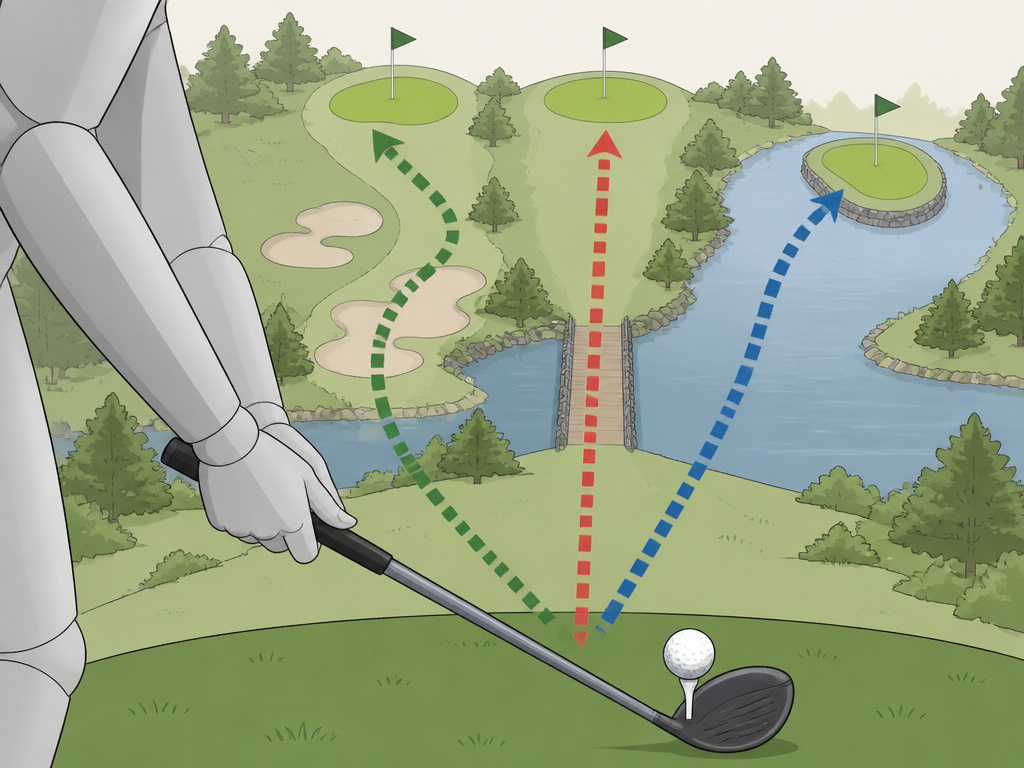
No matter what school you’re facing, your process should be consistent. This is where I favor straightforward routines players can actually stick with.
- Identify the School from the Tee. Before you pull a club, categorize the hole. Is it strategic (options), penal (one way), or heroic (risk/reward)? This frames your entire plan.
- Find the “Miss” for Your Skill Level. On a penal hole, your miss might be a different club to ensure you carry the trouble. On a strategic hole, your miss might be to the wide side of the fairway away from the pin-cutting bunker.
- Commit to Your Line. Once you’ve chosen a path, whether it’s the safe lay-up or the heroic carry, commit fully. Doubt is a bigger hazard than any bunker.
- Play to Your Personal Par. On a brutal penal par-4, your “par” might be a well-executed bogey. On a heroic par-5, a safe par might be a great score. Adjust your expectations based on the design challenge in front of you.
Frequently Asked Questions
Can a single hole be both penal and heroic?
It’s rare, but possible. The defining factor is choice. A penal hole offers no alternative; a heroic one does. A hole with an island green (penal) that also has a safe bail-out area short and right (heroic) would blend the two. Most architects consider such a hole to be heroic, because the choice exists, even if one option is extreme.
Which design school is considered the “best” by architects?
There’s no consensus, but strategic design is most respected among modern architects. It’s seen as the most sophisticated and inclusive, challenging the best players’ minds while giving higher-handicappers room to play. The principles of minimalist design are deeply rooted in this strategic school.
Did famous architects like Donald Ross use one style?
The greats used all three. Donald Ross, Alister MacKenzie, and A.W. Tillinghast were masters of strategic design, but they weren’t afraid to use a penal bunker to guard a key position or create a heroic carry over natural terrain. Their genius was in the blend and the routing.
How do bunker types relate to these schools?
Absolutely. Different golf bunker types serve different schools. A deep, flashed-face pot bunker is a penal tool, its job is to add a stroke. A large, shallow fairway bunker placed to cut off an angle is a strategic tool, its job is to influence your tee shot decision.
What’s the biggest mistake amateurs make facing penal design?
Trying to be perfect. On a forced carry over water, the amateur often tries to land the ball pin-high on the slickest part of the green. The pro’s goal is simply the center of the putting surface, or even the front portion, to ensure the carry. They take the margin for error the design rarely offers.
The Bottom Line
The three schools aren’t just history; they’re a playbook. Next time you stand on a tee, don’t just see yardage. Ask what kind of question the hole is asking. Is it a strategic puzzle, a penal test, or a heroic gamble?
One rule most guides skip: if you’re playing a course known for penal design and your handicap is above 15, mentally re-par the hardest holes before you start. A bogey on a brutal par-3 is a win. This reframes the round from frustration to a series of achievable challenges. Good golf comes from simpler, repeatable movements, and that includes the movement of your mind across the landscape a great architect has laid before you.
