
Wrist Hinge in Backswing Explained for Power and Accuracy
This post contains affiliate links. As an Amazon Associate, we earn from qualifying purchases.
This post contains affiliate links. As an Amazon Associate, we earn from qualifying purchases.
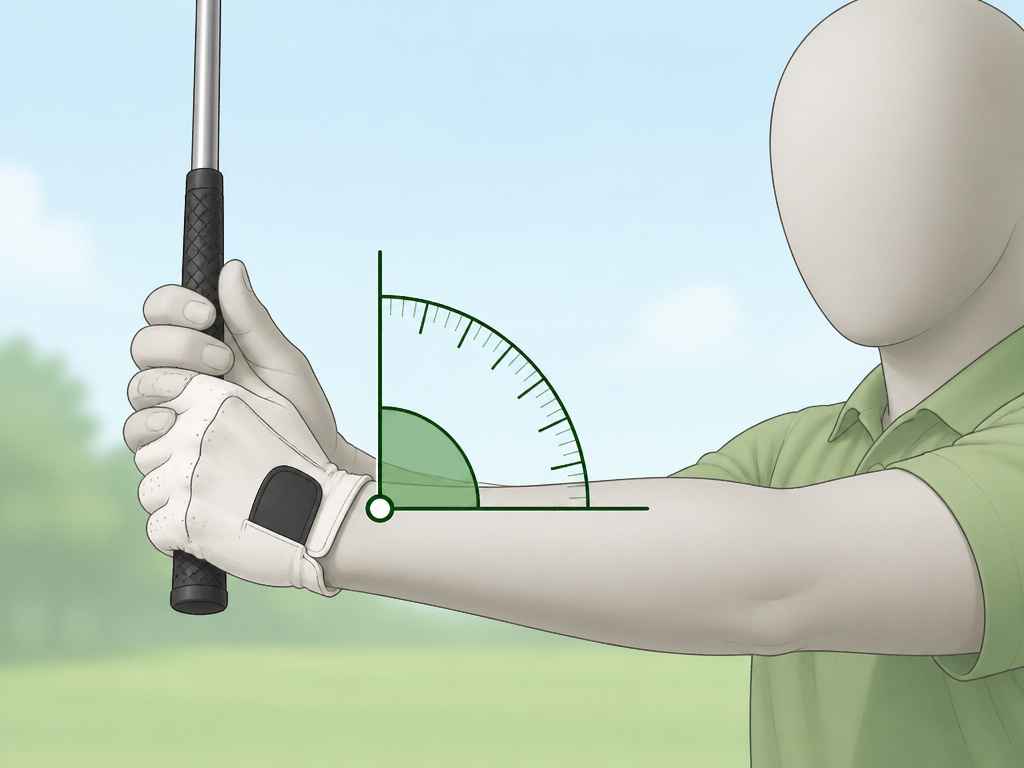
Wrist hinge in the backswing is the upward cocking of your wrists, primarily radial deviation, that loads the club for power and positions it for a consistent downswing. The goal is a 90-degree angle between your lead arm and the club shaft by the time that arm is parallel to the ground. This creates lag, the stored energy you release into the ball.
That 90-degree checkpoint is useful, but it’s just a shape. The real conversation is about the three distinct wrist movements happening underneath and the timing that fits your swing. Most instruction misses the biomechanical data that shows what skilled players actually do, which often contradicts the “flat wrist” and “stable hinge” mantras.
What follows: a breakdown of radial deviation, flexion, and extension, the science on what happens at the top of a professional swing, and a clear path to finding your own hinge timing without overthinking it.
Key Takeaways
- Wrist hinge is radial deviation, the thumb-side bend. It’s separate from wrist flexion (bowing) and extension (cupping), which control the clubface.
- A 90-degree angle between your lead arm and club shaft at the “left-arm parallel” position is a reliable mid-backswing checkpoint for building lag.
- Skilled golfers often have a cupped lead wrist at the top, according to a University of Western Australia study, debunking the universal “flat wrist” teaching.
- Your hinge timing, early, late, or gradual, should match your tempo. A gradual hinge throughout the backswing is the most repeatable for most amateurs.
- Over-hinging is a real fault. It locks your wrists, makes it hard to shallow the club, and forces a flip through impact to square the face.
What Is Wrist Hinge and Why It Matters
Wrist hinge is not a mystery move. Hold a club out in front of you with arms extended, then cock your wrists upward so the club points at the sky while your arms stay still. That’s it. That upward angling is the primary power lever in your swing.
Wrist hinge (radial deviation) is the upward cocking of the wrists that increases the angle between the lead forearm and the club shaft. It is the primary mechanism for storing elastic energy in the golf swing, which is then released as clubhead speed through impact.
Without it, you’re just making an arm swing. Your body has to over-rotate or lunge to generate any speed, and consistency vanishes. A proper hinge creates lag, the retained angle between your lead arm and the club as you start down. That lag is potential energy. Releasing it late, just before impact, is where pure ball-striking and extra yards come from.
The checkpoint you’ll hear everywhere is the 90-degree angle when your lead arm is parallel to the ground. It’s a good visual target. But fixating on the exact number is a distraction. Jon Rahm has less than 90 degrees. Matthew Wolff has more. Both hit it a mile. The angle needs to be meaningful, not mathematically perfect.
The Three Types of Wrist Movement (It’s Not Just Hinging)
Most golfers lump everything the wrists do into “hinge.” That’s why fixes fail. Your wrists move in three distinct planes, and each one has a different job. Confusing them leads to a face that’s wide open or shut at the top.
| Movement | Action | Primary Role in Swing | Common Feel |
|---|---|---|---|
| Radial/Ulnar Deviation | Moving hand thumb-side (radial) or pinky-side (ulnar). | Power & Lag. This is the true “wrist hinge.” It loads the club upward. | Cocking the wrists up and down. |
| Flexion/Extension | Bending palm toward forearm (flexion) or back of hand toward forearm (extension). | Clubface Control. Flexion (bowing) closes the face; extension (cupping) opens it. | “Bowing” or “cupping” the lead wrist. |
| Supination/Pronation | Rotation of the forearm (turning palms up/down). | Swing Path & Plane. Influences whether the club travels around you or more vertically. | Rolling the forearms during the takeaway. |
Radial deviation is your hinge. It’s the up-and-down motion that creates the angle. Flexion and extension are your face control. Trying to hinge more by flexing your wrist just closes the clubface without adding any meaningful load, it’s a common compensation.
Where this goes sideways: Over-hinging with forced radial deviation often pushes the lead wrist into extension (a cup) as a side effect. You max out the hinge but leave the face open and disconnected from your turn. The downswing becomes a recovery move.
This separation is non-negotiable. When you practice, you must know whether you’re training the hinge or training the face. Mixing them up guarantees inconsistency.
What Science Says vs. What You’ve Been Told
Coaching dogma is loud. For years, the mantra has been a “flat” lead wrist at the top of the backswing for consistency. The University of Western Australia wrist kinematics study measured what actually happens.
The 2012 study used high-speed motion capture on skilled golfers. It found their average lead wrist position at the top was 27 degrees extended, cupped, not flat. It also recorded substantial left wrist flexion during the downswing, contradicting the idea of a rigid, stable hinge.
The data suggests a cupped position is a natural byproduct of a full shoulder turn and loaded trail side for better players. Forcing flatness can restrict the turn and kill power. This doesn’t mean you should chase a cup. It means the “flat wrist” rule is not a universal law. Your body’s mobility and your grip dictate your top position more than a textbook image.
The study’s real value is in the numbers. It shows the wrist is an active, dynamic joint through the swing, not a locked hinge. Your feel for a “stable” left wrist might actually be the coordination of all three movement types working together, not the absence of motion.
Early, Late, or Gradual Hinge? Picking Your Timing
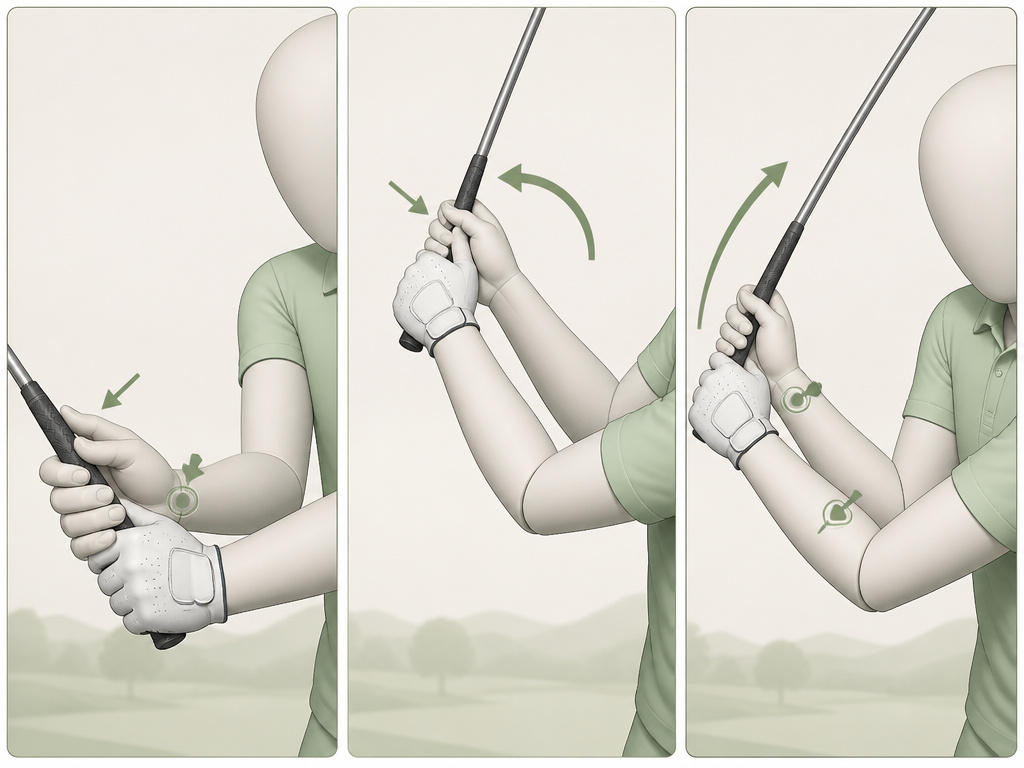
Once you know what to hinge, the next question is when. There are three broad schools of thought, and each fits a different type of player.
| Timing Style | How It Works | Best For | Biggest Risk |
|---|---|---|---|
| Early Hinge | Wrists cock almost immediately in the takeaway. Hinge is complete by waist height. | Golfers with limited shoulder turn or who take the club back too flat. Keeps the swing simple. | Can become “handsy” and narrow, losing connection to the body turn. |
| Late Hinge | Wrists stay quiet until near the top of the backswing, then cock abruptly. | Strong, flexible players with fast tempos who want a wide arc. Creates a “whipping” sensation. | Terrible timing. If the hinge isn’t complete before the downswing starts, you have no stored energy. |
| Gradual Hinge | Hinge increases steadily throughout the entire backswing. No single “set” point. | Most amateur golfers. It promotes smooth tempo, reduces timing dependence, and is how most tour pros actually swing. | Can feel like “no hinge” if you’re used to a deliberate cocking motion. Requires trust. |
The gradual hinge is the safest recommendation. It syncs the wrist load with your body rotation naturally. Think of it as the club setting itself against the momentum of your turn, not as a conscious “cock now” command. This approach directly supports a cohesive backswing sequence.
Common mistake: Trying to imitate a late hinge because it looks powerful. If your transition is even slightly quick, you’ll start down with the club fully unloaded, leading to a weak, casting motion. Early is almost always better than late for consistency.
How to Find and Feel Your Hinge: Drills That Work
Telling your wrists to “hinge” is vague. These drills give you a specific, repeatable feel. Use them in slow motion before making full swings.
1. The Hammer Drill
Take your address posture without a ball. Grip the club normally. Using only your lead wrist, hinge the club upward until the butt end points at the sky and the shaft is parallel to the ground. Your arm doesn’t move. This isolates pure radial deviation. Do ten reps, then try to replicate that “upward cock” feeling during your first takeaway move.
2. The 45-Degree Preset
Address the ball. Before you start your swing, hinge your wrists so the club is on a 45-degree angle between you and the target line. Your lead wrist should feel like it’s hinging up, and your trail wrist should feel like it’s bending back. Hold this preset, then make your normal shoulder turn. This drill wires the feeling of a square, loaded hinge into the start of your motion.
3. The Left-Arm Parallel Checkpoint
This is your main feedback tool. Set up your phone to record a face-on view. Make slow-motion swings, pausing when your lead arm is parallel to the ground. Freeze the video. You should see roughly a 90-degree angle between your arm and the club. If the angle is smaller, you’re not hinging enough. If it’s larger, you might be over-hinging or adding flexion. This objective checkpoint beats any internal feel.
These drills build the muscle memory for a functional hinge. They tie the wrist action directly to your swing plane and shoulder turn, preventing the arms from working independently.
The Critical Link to Your Downswing and Impact
A good hinge is worthless if you waste it before the ball. The most common failure is “casting” or “early release”, throwing the stored angle away from the top. This is where the concept of lag becomes real.
Your hinge creates the lag angle. Your job in the downswing is to maintain that angle as long as possible while your lower body leads. The feeling is of your hands trailing behind your pivoting hips. The wrists unhinge violently, but only in the last few feet before impact.
If you struggle with casting, the issue is often in the transition, not the hinge itself. A poor weight shift or an over-the-top move forces the hands to throw the club outward. Working on your downswing sequence is more important than adding more hinge.
The payoff for maintaining lag is shaft lean at impact, the handle of the club ahead of the clubhead. This delofts the club, creates compression, and leads to a piercing ball flight. It’s the physical proof you used your hinge correctly. Understanding shaft lean at impact completes the feedback loop from your backswing load to your strike quality.
Troubleshooting Your Wrist Hinge
Not every problem is a lack of hinge. Here’s how to diagnose the most common issues.
- “I can’t feel any hinge.” You’re likely gripping too tightly. Tension in the hands and forearms locks the wrist joints. Do five practice takeaways holding the club with just your last three fingers. Let the club’s weight pull your wrists into a set.
- “My hinge feels weak and the club is across the line.” This is often a confusion of hinge with forearm rotation. You’re probably adding too much pronation (rolling) in the takeaway. Focus on the hammer drill to get the vertical hinge feeling first.
- “I hinge, but I still slice.” Your hinge might be fine, but your lead wrist is likely in extension (cupped) at the top, leaving the face open. Work on the 45-degree preset drill, emphasizing the trail wrist bending back to square the face.
- “I hit big hooks when I try to hinge more.” You’re now confusing hinge with lead wrist flexion (bowing). You’re closing the face dramatically at the top. Go back to the movement table. Make sure your “upward cock” isn’t turning into a “sideways bow.”
These fixes all stem from understanding the three separate movements. What feels like a hinge problem is usually a face control or path issue in disguise, governed by the fundamental ball flight laws.
Frequently Asked Questions
Do you hinge your wrists the same with driver and irons?
The mechanism is identical, but the feel and result differ. With a driver, you might feel a later, fuller hinge to maximize arc for distance. With an iron, especially a wedge, the hinge might feel earlier and more controlled to promote a steeper, more descending strike. The body adjusts the recipe for the required shot.
Is the “motorcycle move” part of the hinge?
No. The “motorcycle move”, twisting your lead wrist as if revving a throttle, is primarily lead wrist flexion. It’s a face-control move, often used in the downswing to help square a open face. It’s separate from the radial deviation of the hinge, though they can happen together.
How much hinge is too much?
When it restricts your turn or locks your wrists. If you feel a stretching sensation in your lead forearm at the top or can’t smoothly start your downswing, you’ve probably over-hinged. The hinge should feel loaded but athletic, not maxed out and tight.
Can technology like Hack Motion help?
Absolutely. Wearable sensors like Hack Motion give you real-time feedback on your wrist angles in degrees. They remove the guesswork, showing you exactly if you’re in radial deviation, flexion, or extension. For players struggling to feel the difference, it’s a valuable training aid.
Should I think about unhinging my wrists?
Never. “Unhinging” is a consequence, not an action. Your focus should be on maintaining the lag angle as your body rotates toward the ball. The centrifugal force of the swing will unhinge your wrists automatically at the right moment. Trying to consciously unhinge leads to casting.
Before You Go
Wrist hinge in the backswing isn’t a magic trick. It’s radial deviation, a specific, trainable movement that loads the club. Aim for the 90-degree checkpoint at left-arm parallel, but understand that the science shows skilled players often have a cupped lead wrist at the top.
Forget the debate between an early or late set. A gradual hinge that builds with your turn is the most reliable pattern. Practice the hammer and 45-degree drills to isolate the feeling. Most importantly, stop confusing hinge with clubface control. They’re different levers. Work on them separately, then let your athleticism blend them into a swing that stores energy and delivers it squarely. That’s the whole game.
