
Golf’s Longest Drives in History: Unbelievable Power Records
This post contains affiliate links. As an Amazon Associate, we earn from qualifying purchases.
This post contains affiliate links. As an Amazon Associate, we earn from qualifying purchases.
The longest drive in golf history recognized by Guinness World Records is 515 yards, hit by 64-year-old Mike Austin in 1974 with a steel-shafted persimmon driver. The longest drive in the PGA Tour’s modern ShotLink era is 477 yards, hit by Max Homa in 2024. These records are separated by nearly five decades, different equipment, and a fundamental debate about what constitutes a “record” drive.
That gap tells a story. It’s not just about raw power. It’s about the conditions a ball meets after it leaves the clubface, the technology available, and the very definition of a competitive shot. A 787-yard cart-path rocket from 1992 sits in the record books, too, but it’s a footnote, a lesson in how bizarre outcomes can overshadow pure performance.
What follows is a breakdown of the three drives that matter, the equipment that made them possible, and the real reason Mike Austin’s 515-yard blast remains the benchmark. By the end, you’ll know exactly why a 64-year-old man with a wooden club still holds a record that today’s tour pros, with all their technology, haven’t touched.
Key Takeaways
- The 515-yard record is a product of its moment. Mike Austin’s legendary drive benefited from a 35 mph tailwind and thin, dry Las Vegas air at 2,000 feet of elevation, conditions that add serious yardage.
- Modern records are measured differently. The PGA Tour’s ShotLink system, fully implemented in 2003, provides an official, tech-verified ledger for the modern era, with Max Homa’s 477-yard drive at the top.
- Equipment evolution changed the game, but not the ceiling. Today’s 460cc titanium drivers and multi-layer balls are engineered for consistency and forgiveness, not just to chase a single freak number.
- The real goal is controlled distance. For every 477-yard downhill bomb, there are thousands of 300-yard drives that find the fairway, and the latter wins more tournaments.
- Understanding these records reframes your own goals. Chasing max distance is a fun novelty, but building a repeatable, powerful swing is what lowers scores.
The Two Records That Define “Longest”
You can’t talk about the longest drives in golf without splitting the conversation in two. There’s the all-time, Guinness-certified record for a drive hit in competition. Then there’s the official PGA Tour record for the ShotLink era, which is about verified, measured performance in the modern game. They are different beasts.
The Guinness World Records entry for the longest drive in competition lists Mike Austin’s 515-yard blast from 1974. The PGA Tour’s ShotLink era record is Max Homa’s 477-yard drive from 2024. One is a legendary feat with period equipment; the other is a digitally documented product of the modern tour.
The Mike Austin drive is golf folklore. On September 25, 1974, the 64-year-old pro was playing in the U.S. National Seniors Open at Winterwood Golf Course (now Desert Rose) in Las Vegas. Using a Wilson 43.5-inch, steel-shafted persimmon driver and a 100-compression Titleist balata ball, he unleashed a drive on a 450-yard par 4. Witnesses, including former PGA champion Chandler Harper, saw it carry over 400 yards, bounce onto the green, and roll 65 yards past the hole. Tournament officials later measured it with a wheel.
The conditions were perfect. The course sat at 2,000 feet above sea level, and a 35 mph tailwind gave the ball an extra push. That context is everything. It shows how the evolution of golf clubs isn’t just a straight line toward more distance; sometimes, the old tools in the right hands, in the right moment, could do something special.
The Max Homa drive represents the modern, measured game. On January 6, 2024, during the third round of The Sentry at Kapalua’s Plantation Course, Homa crushed a 477-yard drive on the 525-yard, par-4 seventh hole. The ShotLink system, laser-based and deployed on every hole since 2003, captured it. The hole plays dramatically downhill, and the trade winds were helping. Homa was left with a 44-yard pitch shot.
This record is about verification. The PGA Tour actually revised its pre-2003 data, erasing longer drives (including a 498-yard one by Tiger Woods) due to measurement inconsistencies. Homa’s drive is the longest they stand behind. It’s a number that reflects the combination of modern athlete, modern equipment, and a course built for spectacle.
| Record | Holder | Year | Distance | Key Context |
|---|---|---|---|---|
| Guinness World Record (in competition) | Mike Austin | 1974 | 515 yards | Persimmon driver, balata ball, 35 mph tailwind, 2,000 ft elevation. |
| PGA Tour ShotLink Era Record | Max Homa | 2024 | 477 yards | Modern titanium driver, downhill par 4 at Kapalua, verified by laser. |
| Longest Cart-Path Assisted Drive | Carl Cooper | 1992 | 787 yards | Ball hit a downhill concrete cart path; resulted in a double bogey. |
The third entry in that table is the cautionary tale. Carl Cooper’s 787-yard drive in the 1992 Texas Open is the longest ever recorded on tour, but it’s an outlier. His ball hit a cart path and just kept rolling. It’s a fun trivia answer, but it doesn’t teach us anything about driving the ball well. It teaches us about luck and bizarre course geometry.
The Anatomy of a Monster Drive: Breaking Down Mike Austin’s 515
Strip it back. To understand how a 64-year-old man with a wooden club hit a ball 515 yards, you have to look at the recipe. It wasn’t one ingredient; it was the perfect combination of several.
First, the equipment. That Wilson persimmon driver and Titleist balata ball are relics today. A modern golf ball evolution has given us urethane-covered, multi-layer spheres designed for less spin and more control. The balata ball Austin used was softer, spun more, and was notoriously susceptible to cutting. But in the right conditions, specifically, with that helping wind, that higher spin could help the ball stay in the air longer, riding the wind like a sail.
Then, the conditions. The elevation and wind are the essential math. Air is thinner at 2,000 feet, creating less drag. A 35 mph tailwind is a massive boost. Combine them, and you have a force multiplier that even today’s tour pros rarely experience all at once.
Finally, the swing. Austin was a student of kinesiology, the study of human movement. His Mike Austin swing Wikipedia entry details a method based on “supple quickness,” generating speed through relaxation, not brute force. He was 6’2″ and powerfully built, but film shows a swing that looked fluid, not violent. The story goes that his clubhead speed approached 150 mph, a number that would still be elite on today’s long-drive circuit.
Where this goes sideways: Believing Austin’s record is only about old-school skill. Remove the 35 mph wind and 2,000 feet of elevation, and that 515-yard drive becomes a 430-yard drive, still monstrous for a 64-year-old with that equipment, but not a supernatural feat. The environment did a huge amount of the work.
Here’s the truth nobody sells: modern players could undoubtedly surpass 515 yards if you placed them in those exact same conditions with their modern gear. But those conditions are freakishly rare in tournament play. The modern tour doesn’t set up courses where a 35 mph downwind is acceptable for competition; it becomes unplayable. So Austin’s record stands not because people are weaker now, but because the competitive environment that allowed it simply doesn’t exist anymore.
Why Modern Pros Haven’t Topped 515 Yards (And Why They Don’t Try)
Look at the PGA Tour driving distance leaders. They’re averaging around 315 yards. The longest single shot in the ShotLink era is 477 yards. So why hasn’t anyone, with a 460cc titanium driver and a computer-designed ball, cracked 515 in competition?
The answer is in the question. They’re not trying to.
Tour golf is a game of controlled aggression, not max-effort blasts. A player’s goal off the tee is to find the optimal position in the fairway for their next shot, balancing distance with accuracy. Swinging at 120% effort to chase an extra 20 yards brings the rough, the trees, and big numbers into play. As the Wikipedia golf drive entry notes, the drive is just the first step in a longer process.
The equipment itself is optimized for a different goal. Modern technological advances in golf clubs and balls are about forgiveness and consistency across the face, not pushing the absolute distance ceiling. A modern driver is designed to help a pro hit 10 out of 14 fairways with a 315-yard average, not to help them hit one 515-yard moon ball that might go out of bounds.
Let’s talk about the conditions again. Kapalua, where Homa hit 477 yards, is downhill and downwind. But it’s also at sea level. The tour rarely plays at significant elevation in windy conditions. The combination Austin enjoyed, high altitude and gale-force tailwinds, just doesn’t line up on the modern championship calendar.
Common mistake: Comparing these records directly as a measure of player ability. It’s a flawed comparison. It’s like comparing a home run hit in the thin air of Denver to one hit in San Francisco. The context is the story.
Furthermore, the tour actively manages distance through course setup and equipment regulations. The USGA and R&A have rules on clubhead size, spring-like effect (COR), and ball specifications. The game’s guardians are wary of distance rendering classic courses obsolete. So the arms race has limits.
For the amateur, the lesson is profound. Obsessing over your driver distance is often a distraction. I’ve watched countless players wreck their swings trying to add 10 yards, only to lose all accuracy. Good golf should feel less complicated the more you understand it. The driver is a tool for setting up the hole, not for winning a long-drive contest on every tee.
The Gear Behind the Distance: Then vs. Now
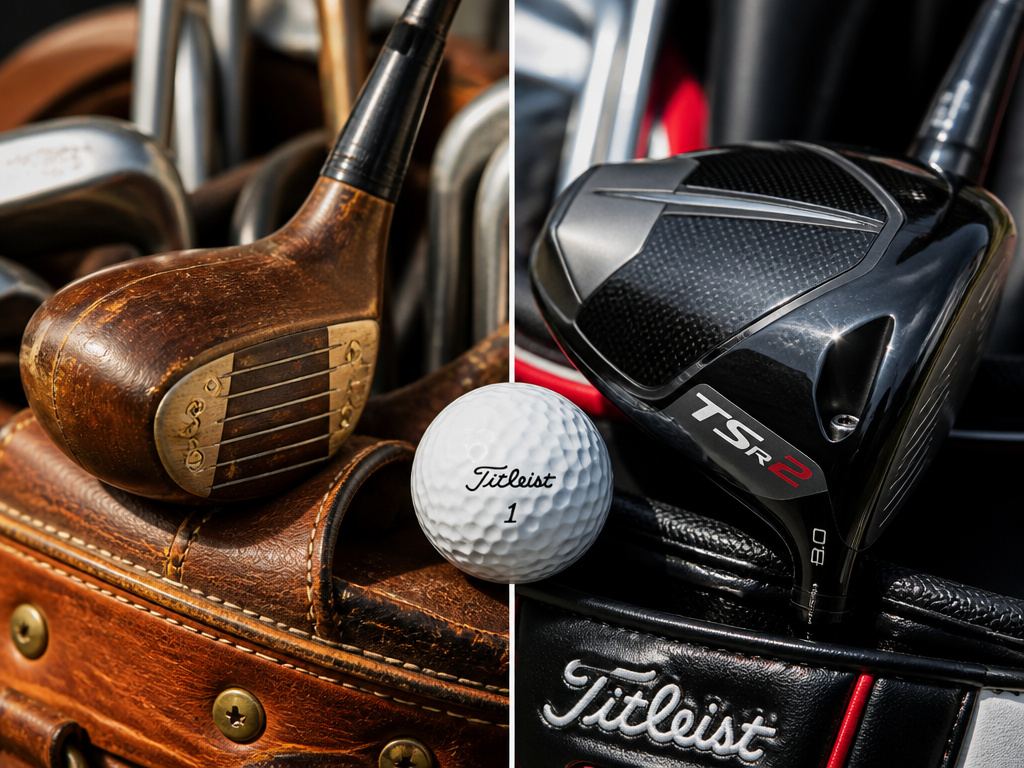
Understanding the records means understanding the tools. The difference between Mike Austin’s bag and Max Homa’s bag is the difference between a hand-built sports car and a Formula 1 machine.
The 1974 Arsenal (Mike Austin):
- Driver: Wilson persimmon head, steel shaft (43.5 inches). Persimmon is a hard wood. The sweet spot was tiny, about the size of a dime. Miss it by half an inch, and you’d feel a painful vibration and lose massive distance.
- Ball: Titleist 100-compression balata. The balata cover was soft and cut easily, but it allowed skilled players to generate high spin for workability. It was terrible for distance on mis-hits.
- Goal: Skill-based maximization. This equipment rewarded a perfect strike with a high-spin ball that could ride the wind. It punished anything less.
The 2024 Arsenal (Modern Pro):
- Driver: Titanium or carbon-composite head (460cc max), lightweight graphite shaft (often 45+ inches). The face is a complex flex zone, engineered to produce high ball speeds across a much larger area. Forgiveness is the priority.
- Ball: Multi-layer urethane cover (e.g., Titleist Pro V1, TaylorMade TP5). These balls are designed to reduce driver spin for longer, straighter flight while maintaining high spin on wedge shots. They are far more durable and consistent.
- Goal: Consistent, optimized performance. This equipment helps a pro maintain distance on off-center hits and control ball flight in various conditions. It’s built for scoring over 72 holes, not for one heroic swing.
This shift explains why the best golf balls for distance today aren’t just about raw yardage. They’re about a complete performance profile, low long-game spin, high short-game spin, and feel. A modern low spin golf ball can help a higher-speed player reduce slices and hooks for more fairways, which is more valuable than an extra 5 yards of carry.
The change is even clearer when you look at ball construction. The affordable, durable 2-piece golf balls used by many amateurs are built for distance and durability, while the advanced 3-piece golf balls offer that tour-level blend of control and power. The gear is specialized now.
Beyond the Driver: Other Historic Power Moments

While the driver gets the glory, other clubs have had their historic moments. The fairway wood, for instance, is often a more impressive display of controlled power.
Consider the 3-wood clubs in a pro’s bag. Hitting a 3-wood 290 yards off the deck on a par 5 is, in many ways, a more skillful shot than a 320-yard driver off a tee. It requires perfect contact, ideal launch conditions, and nerve. These shots don’t get a “longest ever” list, but they are the engine of eagle opportunities and are crucial for understanding a player’s complete power profile.
This focus on holistic power, not just driver smashes, separates the true champions. The players who dominate combine driver distance with long-iron prowess and strategic thinking. They use their power to create shorter approach shots, leading to the kind of scoring that produces record low rounds and membership in the 59 club.
Frequently Asked Questions
What is the longest drive ever recorded on the PGA Tour?
The longest drive officially recorded in the PGA Tour’s ShotLink era (since 2003) is 477 yards, hit by Max Homa in 2024. The longest ever recorded on tour is a 787-yard drive by Carl Cooper in 1992, but that was a massive outlier due to a cart path. For a verified, skill-based drive in normal conditions, Homa’s is the record.
How far could Mike Austin hit a drive with modern equipment?
It’s a great “what if.” Given his legendary clubhead speed and technical knowledge, Austin would undoubtedly be a long-drive competitor with modern gear. In his prime, with a modern driver and ball, estimates from swing experts suggest he could consistently surpass 400 yards, with potential max drives well over 450 under optimal conditions. The 515-yard record, however, was a perfect storm of his skill, period equipment, and extreme environmental factors.
Why do long-drive competitors hit it farther than PGA Tour pros?
Long-drive competitors have one job: maximize distance on a grid-wide fairway. They use longer, stiffer clubs (often 48-inch drivers), specialized distance golf balls, and train specifically for rotational speed and power. PGA Tour pros prioritize accuracy, consistency, and shot-shaping for scoring. A tour pro’s swing is a complete toolbox; a long-driver’s swing is a sledgehammer.
Has golf equipment been “dialed back” to stop distance increases?
Yes, to an extent. Governing bodies like the USGA and R&A have implemented rules limiting clubhead size (460cc), the spring-like effect of faces, and the overall distance potential of golf balls. While equipment still advances, these “guardrails” are meant to prevent distance from escalating indefinitely and to protect the strategic challenge of classic golf courses.
What is more important for amateurs: distance or accuracy?
For the vast majority of amateurs, accuracy is infinitely more important. A 230-yard drive in the fairway sets up a manageable approach. A 270-yard drive in the trees leads to penalty strokes, wasted shots, and high scores. I favor straightforward drills players can actually stick with to improve center-face contact and club path before ever worrying about adding speed. Build a repeatable swing first; controlled distance will follow.
Before You Go
Let’s be clear about this: the longest drives in golf history are fascinating landmarks, but they are outliers. They are the equivalent of a 500-foot home run or a 90-yard field goal, spectacular, but not the model for daily success.
The real takeaway isn’t that you need to swing harder. It’s that distance is a combination of factors you can actually work on: efficient swing mechanics (like Austin’s “supple quickness”), understanding how your equipment works, and managing your expectations. Chasing the ghost of a 515-yard drive with a persimmon wood is a fool’s errand. Building a swing that delivers your 7-iron 150 yards on a consistent line is how you break 90.
Strip it back. Good golf comes from simpler, repeatable movements. Whether you’re using a classic persimmon driver or the latest titanium model, the goal is the same: strike the ball well, manage the course, and let the record books worry about the rest. Your scorecard will thank you.
