
Understanding Plugged Ball and Embedded Ball Relief Rules
This post contains affiliate links. As an Amazon Associate, we earn from qualifying purchases.
This post contains affiliate links. As an Amazon Associate, we earn from qualifying purchases.
A plugged or embedded ball gets free relief under USGA Rule 16.3 when it’s anywhere in the general area, including the rough, but never when embedded in sand. You find the spot right behind where the ball is stuck, drop within one club-length of that spot (not nearer the hole), and play on without penalty. The old “fairway only” rule is gone.
That “general area” clause is the whole game. It covers every patch of grass on the course that isn’t a tee box, green, bunker, or penalty area. So your ball can plug in deep rough 20 yards off the fairway and you still get a free drop. The rule changed in 2019 to remove luck from the equation; a bad bounce into soft ground shouldn’t punish you twice.
What follows is the exact procedure, the three things that disqualify you from relief, and the one mistake even tour pros make that can turn a free drop into a two-stroke penalty.
Key Takeaways
- Free relief for an embedded ball applies anywhere in the general area, a 2019 rule change that reversed the old “fairway only” standard.
- You are never entitled to relief if your ball is embedded in sand, whether in a bunker or a sandy area in the general area.
- To take relief, find the spot directly behind the embedded ball, then drop within one club-length of that spot, not nearer the hole.
- You must be able to see part of your ball’s pitch-mark or depression to claim relief; you cannot assume it’s embedded if it’s just sitting down in grass.
- If you lift the ball to check if it’s embedded without marking its spot first, you get a one-stroke penalty.
What “Plugged” and “Embedded” Actually Mean in the Rules
Your ball is embedded when it sits in its own pitch-mark in the ground. The official rule language is “embedded in its own pitch-mark in the ground in the general area.” The key is that the ground has given way and the ball is lodged in the depression it created.
You don’t get relief just because the ball is sitting down in long grass. The lie has to be the result of the ball’s impact. If you can’t see a clear indentation in the earth where the ball landed, you’re likely playing it as it lies. This is the first place weekend players get it wrong. They see a bad lie and assume it’s embedded. The rules require visual evidence.
Where this goes sideways: Declaring an embedded ball without seeing the pitch-mark. If you lift it to check and you’re wrong, that’s a one-stroke penalty for lifting your ball in play without a valid reason. Look first.
The term “plugged” is just a colloquial synonym for embedded. In the rulebook, it’s all Rule 16.3.
The 2019 Rule Change That Rewrote the Book
Before 2019, the default rule was local. A Local Rule had to be in effect to allow free relief for an embedded ball anywhere except in “closely mown areas”, basically, the fairway. If that Local Rule wasn’t adopted, you were taking an unplayable lie penalty if your ball plugged in the rough.
The 2019 golf rules modernization flipped it. Now, Rule 16.3 is the default: free relief everywhere in the general area. The Committee can now adopt a Local Rule to restrict relief to fairway-height areas, but that’s rare. The USGA’s stance was that playing from an embedded lie is not a skill test; it’s just bad luck.
This caused confusion for years. Players who learned the game pre-2019 still instinctively look for their ball in the fairway to see if they get relief. That instinct is now backwards. You get relief everywhere unless a specific local rule says you don’t.
| Old Rule (Pre-2019) | New Rule (Rule 16.3) | What Changed |
|---|---|---|
| Free relief only in “closely mown areas” (fairway) unless a Local Rule said otherwise. | Free relief everywhere in the General Area unless a Local Rule restricts it. | The default flipped from “no relief in rough” to “free relief in rough.” |
| You had to check the scorecard or notice for an adopted Local Rule. | You can assume free relief. You only need to check for a restrictive Local Rule. | Simpler for the player. Removes an element of chance. |
| Embedded in sand outside a bunker was a gray area. | No free relief for any ball embedded in sand, anywhere on the course. | Clarification removes ambiguity. |
The 3-Step Process for Taking Embedded Ball Relief
Getting the drop right is mechanical. Miss a step and you’re playing from a wrong place.
Step 1: Confirm the Ball is Embedded and in the General Area
Before you touch anything, confirm two things. First, you can see part of the pitch-mark or the depression your ball created. Second, the ball is in the general area. The general area is everywhere except teeing areas, greens, bunkers, and penalty areas. If it’s in a bunker or penalty area, different rules apply. This is where using a ball retriever for a water hazard and claiming embedded relief are two completely different things.
Step 2: Find the Reference Point
The reference point is the spot right behind where your ball is embedded. Not to the side, not in front. Imagine a straight line from the hole through the center of your embedded ball. The point on that line directly behind the ball is your reference. Mark this spot with a tee if you need to. This point is sacred for the next step.
Step 3: Drop Within One Club-Length
Using your longest club (usually your driver), measure one club-length from the reference point. You can drop the ball anywhere in that one-club-length radius, as long as the spot is not nearer the hole than the reference point. The ball must first strike the ground within that relief area. You get two tries to drop it correctly; if it rolls outside the area twice, you then place it where it first struck the ground.
This is the featured snippet target: To take relief for an embedded ball under Rule 16.3, find the spot directly behind the ball’s embedded location. The player may drop the original ball or another ball within one club-length of this reference point, no closer to the hole. The ball must first strike the ground within this defined relief area.
Forget this, and you’ve moved your ball outside the allowed relief area. That’s playing from a wrong place, which is a two-stroke penalty in stroke play or loss of hole in match play.
When You Do NOT Get Free Relief
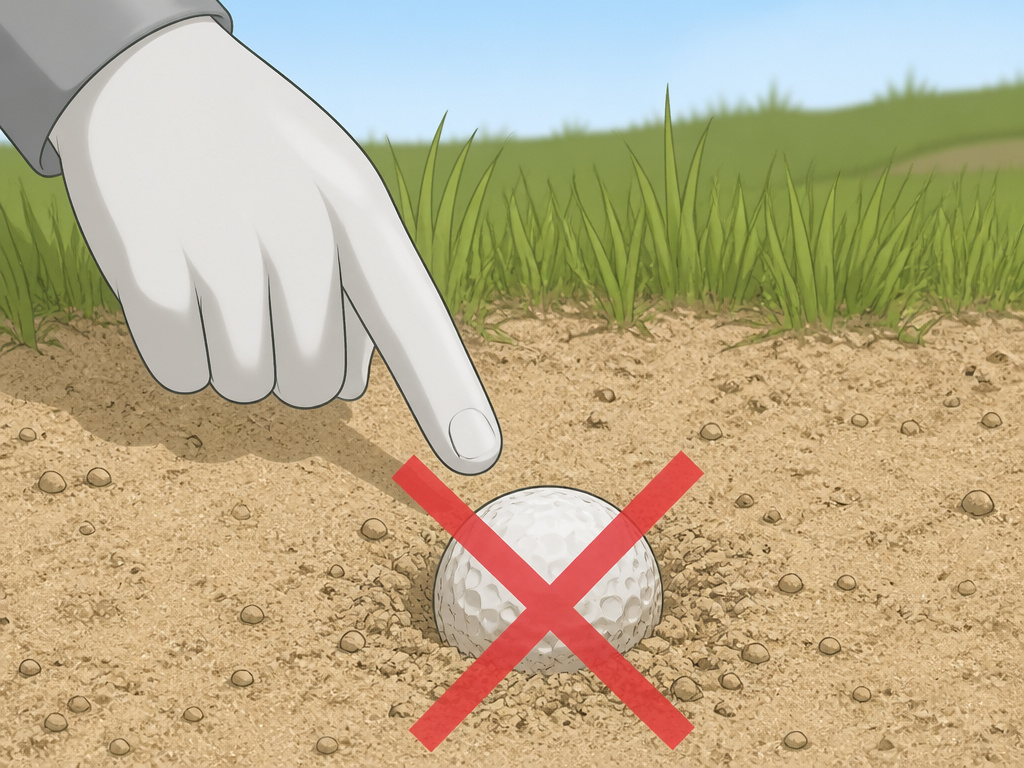
Three specific conditions void Rule 16.3. Get these wrong and you’ve taken illegal relief.
-
Embedded in Sand. This is the big one. If your ball is embedded in any sand on the course, a bunker, a waste area, a sandy patch in the rough, you get nothing. You must play it as it lies or declare it unplayable and take penalty relief. The rule is absolute. The USGA embedded ball rule change specifically reinforced this exception.
-
In a Penalty Area. If your ball is embedded in the ground inside a red or yellow penalty area, Rule 16.3 does not apply. Your only options are to play it as it lies or take relief under the penalty area rules (with a one-stroke penalty). This is why knowing your relief procedures for hazards is critical.
-
On the Putting Green. If your ball embeds on the putting green, a different rule (Rule 13.1e) gives you relief. You place the ball at the nearest spot not nearer the hole where it is not embedded. This is still free relief, but it’s not under Rule 16.3.
| Situation | Entitled to Free Relief Under Rule 16.3? | What To Do Instead |
|---|---|---|
| Ball plugged in fairway | Yes | Take relief as described. |
| Ball plugged in deep rough | Yes | Take relief as described. |
| Ball plugged in a bunker | No | Play as it lies or take unplayable penalty relief. |
| Ball plugged in sandy area outside a bunker | No | Play as it lies or take unplayable penalty relief. |
| Ball plugged in a penalty area | No | Play as it lies or take penalty area relief (1 stroke). |
| Ball embedded on the putting green | No (but relief under Rule 13.1e) | Place ball at nearest non-embedded spot. |
Common Mistakes and How to Avoid Them
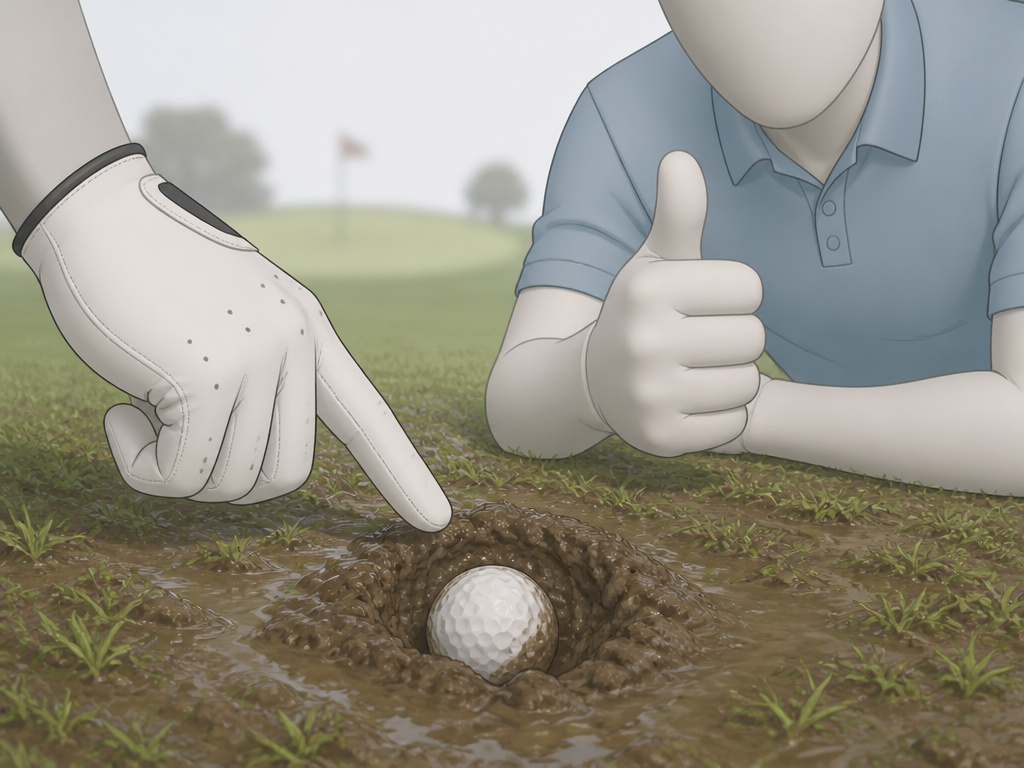
Even professionals stumble over the embedded ball rule. The controversy isn’t in the rule itself, but in its application under pressure.
Mistake 1: Lifting the Ball Before Confirming It’s Embedded
You think it’s plugged. You reach down and pick it up to check. If you were wrong, and it was just sitting down in grass, you’ve just lifted your ball in play without authority. That’s a one-stroke penalty under Rule 9.4. You must replace it. The correct move is to call over a playing partner or official, point out the suspected pitch-mark, and get agreement before any ball is moved.
Mistake 2: Assuming “General Area” Includes Bunkers
It does not. The general area explicitly excludes bunkers and penalty areas. A ball buried under the lip of a bunker is not embedded for free relief purposes; it’s just a horrible bunker lie. This mix-up costs strokes every weekend.
Mistake 3: Improper Dropping Procedure
The one-club-length relief area is measured from the reference point behind the ball, not from the ball itself. Dropping from the side or guessing the length leads to a wrong place. Use your driver. Measure deliberately. The two-minute search time for a lost ball is stressful enough; don’t rush your drop and add penalty strokes.
The part nobody mentions: In wet, muddy conditions, your “embedded” ball might just be stuck in mud on top of the ground. If there’s no true pitch-mark in the ground, it’s not embedded. You’re cleaning and placing it under preferred lies rules if they’re in effect, or playing it as a nasty mud-covered lie.
Pro Controversies: Reed vs. McIlroy
The rule got a public spotlight in a tournament a few years back. Two top players, Patrick Reed and Rory McIlroy, had similar situations on the same day.
Both had balls that appeared embedded. Reed called for a rules official, then moved and inspected his ball before the official arrived. McIlroy simply assessed the situation, deemed it embedded, and took his relief. Both actions were technically legal under the rules, but Reed’s sequence, calling an official then acting before they got there, sparked debate about optics and intent.
The lesson for you? If you’re going to call for an official, wait. Let them see the ball in its original state. If you’re confident in your judgment and your playing partners agree, proceed like McIlroy did. The middle ground, asking for help then not waiting, invites doubt, even if the rulebook says you’re clean. It’s a reminder that golf’s fundamental principle is to play it as it lies unless the rules give you a way out.
Tools and Tips for Dealing with Plugged Lies
You can’t always avoid a plugged ball, but you can be prepared to handle it correctly.
Have a Long Club Ready: Your driver is the standard for measuring the one-club-length relief area. Don’t use a wedge or a putter; use the longest club in your bag to maximize your relief area.
Know the Course Conditions: If the course is soft and wet, expect embedded balls. Mentally prepare to use the rule. In firm, summer conditions, it’s far less common.
Use Technology (Legally): While golf ball trackers won’t help with the rule, knowing exactly where your ball landed can help you and your partners quickly locate and confirm an embedded lie, speeding up play.
When in Doubt, Play a Provisional: If you hit a shot that might be lost or embedded in an unplayable spot, always hit a provisional ball. The uncertainty of whether you’ll find your ball embedded or not is a classic scenario for using this rule.
Frequently Asked Questions
Does “embedded ball” relief apply in the rough?
Yes. Since the 2019 rule change, free relief for an embedded ball applies anywhere in the general area, which includes the rough, unless a specific Local Rule restricting relief to the fairway is in effect. This is a major change from the old rules.
What if my ball is embedded under the lip of a bunker?
You do not get free relief. A bunker is not part of the general area. Your options are to play the ball as it lies from the bunker, or declare it unplayable and take penalty relief, which usually means dropping back in the bunker with a one-stroke penalty.
Can I clean my ball when I take embedded ball relief?
Yes. When you lift your ball to take relief under Rule 16.3, you are allowed to clean it. This is a welcome relief if your ball is caked in mud from the embedded lie.
How do I find the “spot right behind the ball”?
Imagine a straight line running from the hole directly through the center of your embedded ball. The point on that line directly behind the ball is your reference point. It’s often helpful to mark this spot with a tee before you lift the ball.
What’s the penalty for taking relief from a ball that wasn’t actually embedded?
If you lift your ball without being sure it was embedded, and it turns out it wasn’t, you incur a one-stroke penalty for lifting your ball in play without a valid reason (Rule 9.4). You must then replace the ball in its original spot.
The Bottom Line
The plugged ball rule is now one of the more player-friendly in the book. Forget the old “fairway only” mindset. If your ball makes its own pitch-mark in the grass, you get a free drop. Just remember the three no-go zones: sand, penalty areas, and bunkers. Find the spot behind it, use your driver to measure your club-length, and drop it clean. It’s a rule that rewards knowing the book, not just hitting the fairway. Keep a ball cleaner in your bag, after that drop, you’ll want to wipe off the mud before your next shot.
