
8 Best 72 Volt Lithium Golf Cart Batteries of 2026
This post contains affiliate links. As an Amazon Associate, we earn from qualifying purchases.
The Mosasaur 73.6V 105Ah stands out as the best overall 72-volt lithium golf cart battery for its reliable performance, strong BMS, and solid reputation among owners, while the Elefast 72V 105Ah Kit offers a compelling budget-friendly option with an impressive 10-year warranty. For those needing maximum range and power, the AOUSK 76.8V 170Ah is the most versatile pick, delivering exceptional capacity and output.
If you’re upgrading your golf cart, choosing the right lithium battery can make the difference between a smooth, worry-free ride and constant charging stops or premature failure. As someone who’s spent years traveling to top courses and seeing how equipment holds up, I know that reliability and longevity matter just as much as raw power.
This guide cuts through the specs and marketing to focus on what actually matters: real-world performance, safety, and value. We looked at cycle life, BMS quality, owner feedback, and warranty support to find the best 72-volt lithium batteries that will keep your cart running strong, round after round.
Top 8 72 Volt Lithium Golf Cart Batteries in the Market
The Best 72 Volt Lithium Golf Cart Batteries, Reviewed
ELEFAST 72V 105Ah Lithium Battery

Strengths
- 8000-cycle lifespan
- 3C discharge support
- Dual monitoring options
Trade-offs
- Charger not fastest
- Heavy at 138 lbs
- Peak current short duration
ELEFAST makes the strongest all-around case for “best overall” with a rare combination of high power, smart features, and long-term value. The 3C discharge capability, 800A peak for 1 second, is unmatched here, giving serious torque for lifted carts or steep terrain. Owners love the instant acceleration, and the 8000-cycle lifespan means this could be a one-time upgrade for a decade. The 15A charger is solid, and the dual monitoring (LCD touchscreen + Bluetooth app) offers real-time control without guesswork.
It’s not the fastest-charging model, but the balance of durability, power, and warranty makes it stand out. The 5-year US-based support and quick response times are frequently highlighted in reviews. Compared to others, it simply does more without sacrificing reliability, especially for modified or high-performance carts.
Video review
sourcepow 72V 100Ah Lithium Battery
Strengths
- Strong 1000A peak
- 6000+ cycles
- Good value
Trade-offs
- No 3C discharge
- Bluetooth conflict
- Slightly less capacity
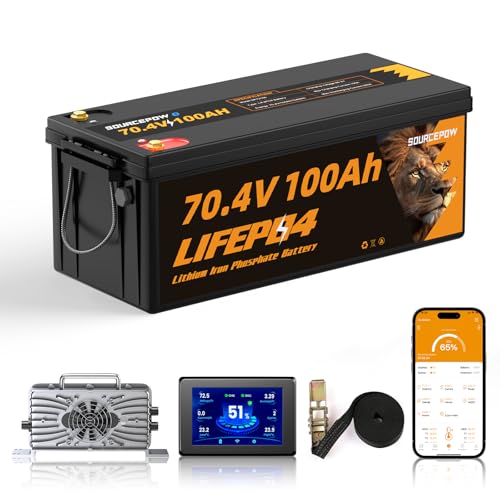
sourcepow hits the sweet spot between cost and capability for buyers who want quality without overspending. The 100Ah capacity delivers around 45 miles per charge, enough for 18 holes with room to spare, and the 1000A 3–5 second peak current handles hills with ease. I like that it uses Grade A prismatic cells, which owners say deliver stable voltage and long-term consistency. The dual Bluetooth options (app or LCD) are useful, though they can’t run simultaneously, a minor annoyance.
With 6000+ cycles, it outlasts most in the mid-tier, and the 5-year warranty is standard but solid. It’s lighter than lead-acid and fits most 72V trays, making installation straightforward. Compared to the Enjoybot, it’s a better value for regular use; compared to pricier 105Ah models, it gives up a little capacity but saves significantly.
Video review
Elefast 72V 105Ah Lithium Kit

Strengths
- 10-year warranty
- Full upgrade kit
- 1000A peak current
Trade-offs
- Charger not fastest
- Heavy
- App and screen conflict
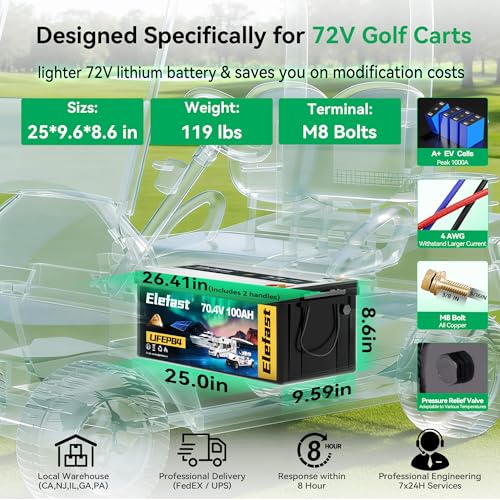
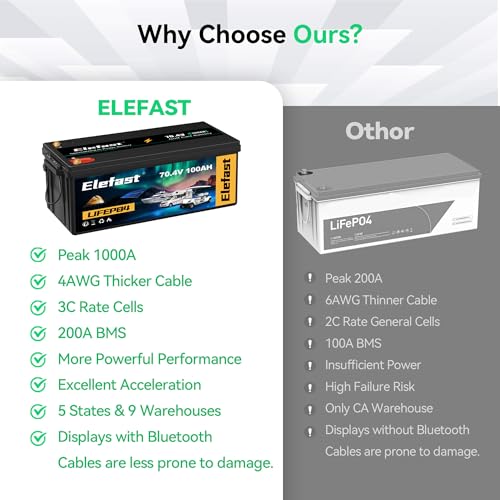
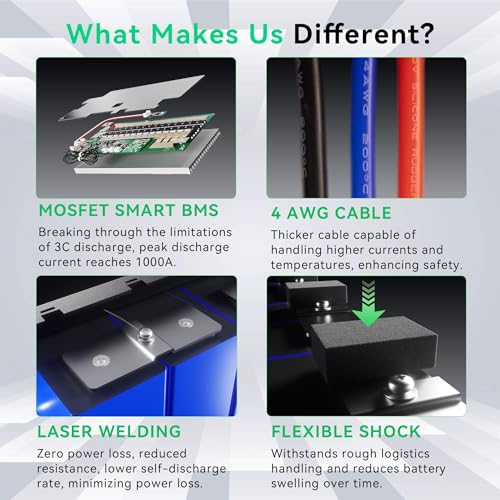
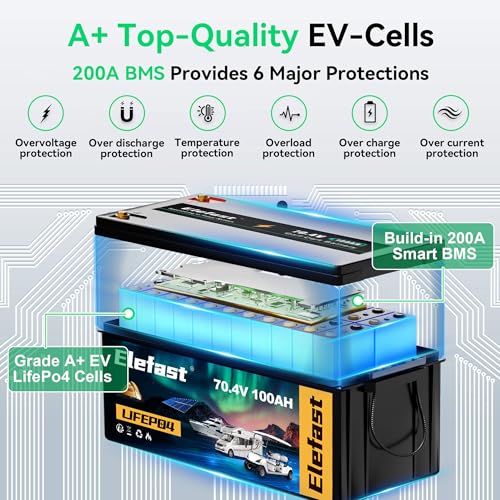
Elefast doubles down on longevity with a 10-year warranty, the longest in this group, and a proven 8000+ cycle rating. That’s a major selling point if you want to install and forget. The kit includes everything: 15A fast charger, LCD Bluetooth monitor, and even securing straps, which makes for a truly complete upgrade. Owners appreciate the plug-and-play design and report easy, tool-free installation in under 30 minutes.
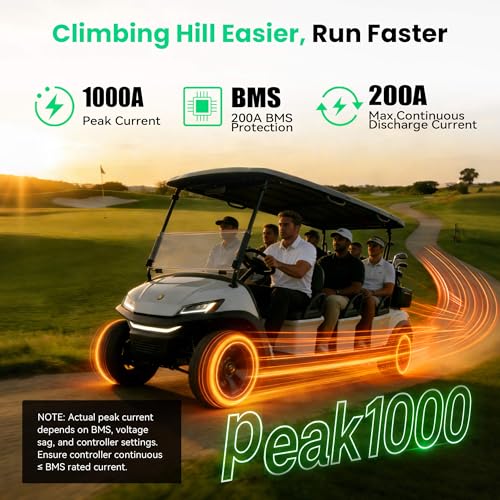
Performance is strong with 200A continuous and a 1000A 1-second peak, enough for six-passenger carts and moderate hills. The low-temp protection works well, and app integration via JBD-BMS is reliable. While the charging speed isn’t class-leading, the long-term confidence and full-kit convenience make this a top pick for hassle-free ownership.
Product photos
VATRER POWER 72V 105Ah Battery
Strengths
- Fast 18A charger
- Touchscreen monitor
- Good hill performance
Trade-offs
- BMS temp cutoff strict
- No 3C discharge
- Average cycle life
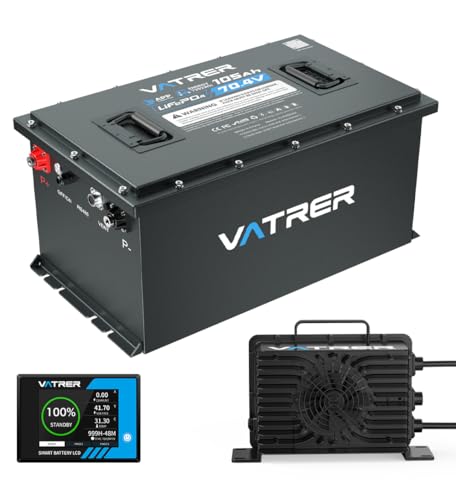
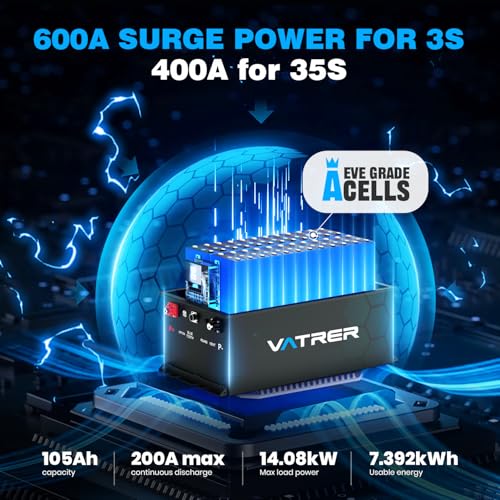
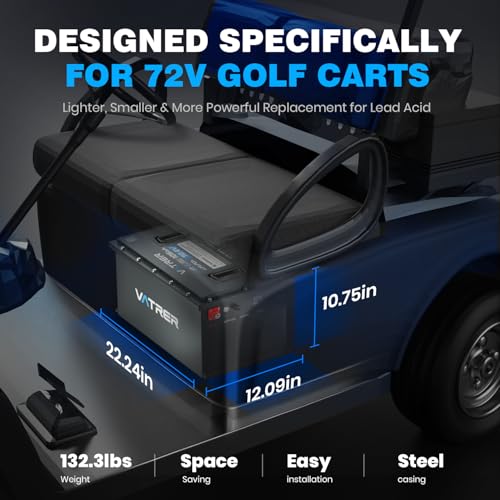
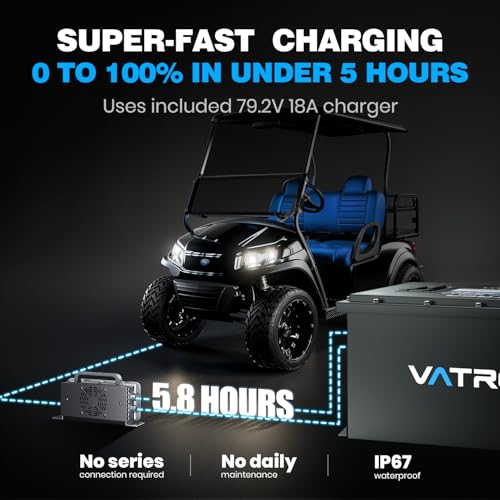
VATRER Power delivers one of the fastest charging experiences here, thanks to the included 18A charger that fills the 105Ah battery in under 6 hours. That’s a real advantage if you’re on a tight schedule or running a fleet. The 200A continuous discharge and 600A peak (3S) offer solid hill-climbing ability, and owners report smooth acceleration and consistent power delivery across 18-hole rounds. The 2.8-inch touchscreen is bright and easy to read, and app connectivity adds remote monitoring convenience.
Cycle life is rated at 4000+, which is good but not class-leading. Some users note the BMS is conservative on low-temp cutoff, which can be a minor hassle in fluctuating conditions. Still, for players who value quick turnaround between rounds and want reliable, no-nonsense performance, this is a strong contender, especially at its price point.
Product photos


AOUSK 76.8V 170Ah Lithium Battery
Strengths
- Massive 170Ah capacity
- 1200A peak current
- 300A BMS
Trade-offs
- Large footprint
- Expensive
- Overkill for golf
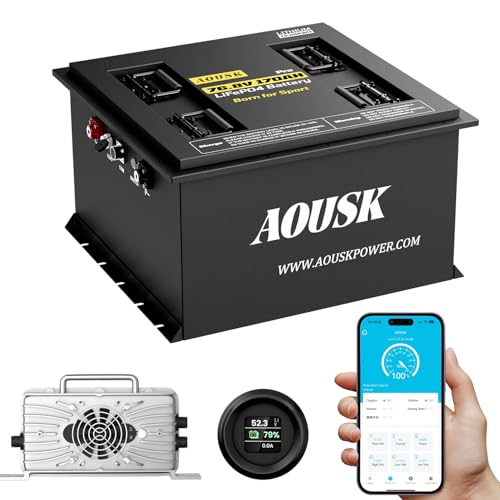
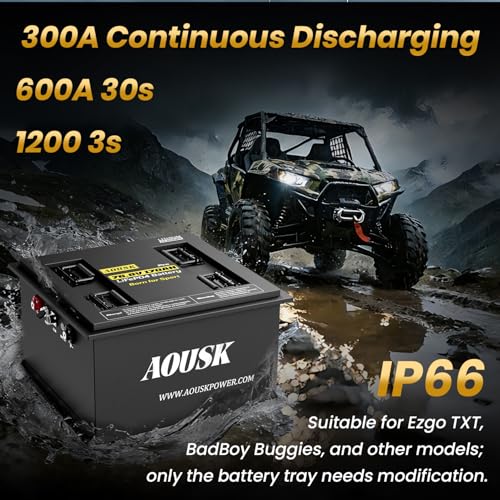
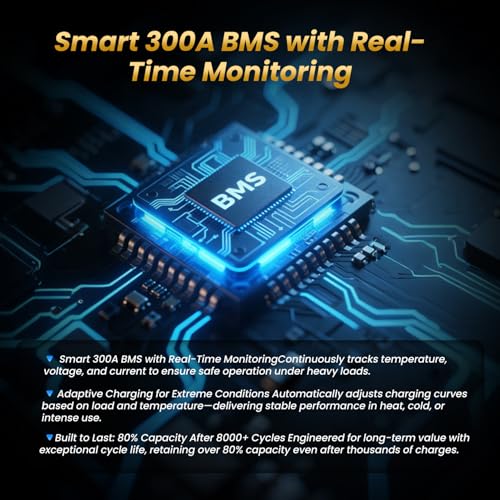
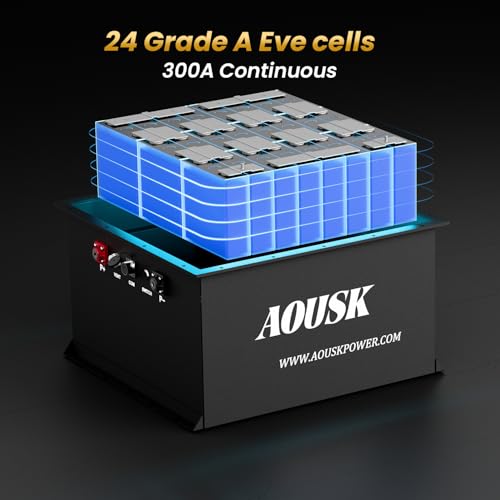
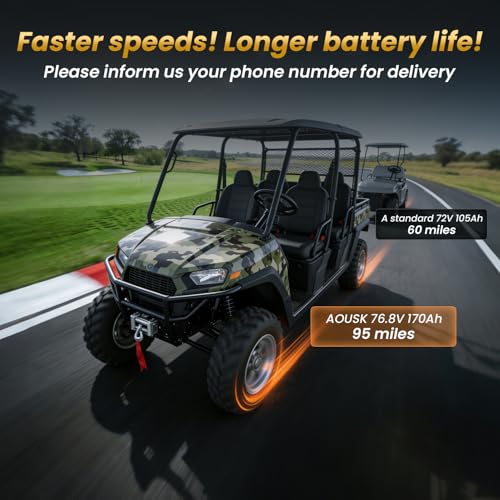
AOUSK goes big, really big, with a 170Ah capacity and 300A BMS, making this the undisputed king of power and endurance. If you’re running a lifted golf cart with winches, lights, and sound systems, or using a UTV for hunting or farm work, this battery laughs at load demands. The 1200A 3-second peak current is insane and built for mud, sand, or steep trail climbs. Owners report 60+ miles of mixed use and zero voltage sag under stress.
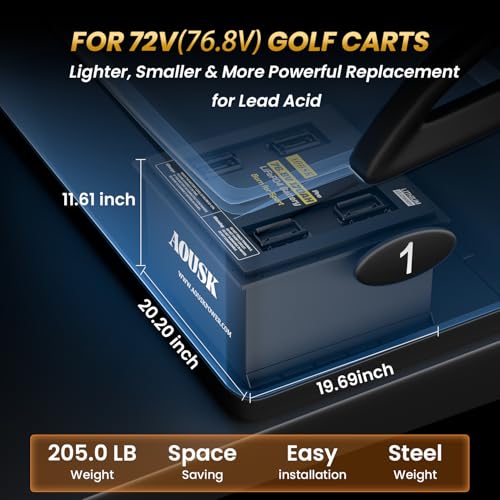
But this is overkill for standard golf carts. The size is larger than typical, 20.2 x 19.7 inches, so it won’t fit most stock trays without modification. It’s also the most expensive, and the 15A charger is slower relative to the massive capacity. This isn’t a golf cart battery; it’s a heavy-duty off-road power plant.
Product photos
Enjoybot 72V 65Ah Lithium Battery
Strengths
- Affordable entry
- Bluetooth monitoring
- IP67 waterproof
Trade-offs
- Lower capacity
- Not for hilly terrain
- Shorter range
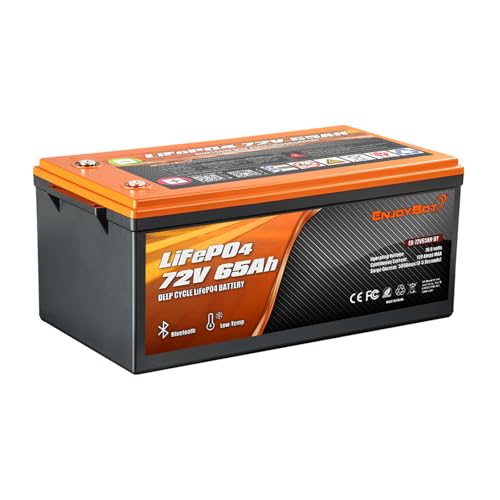
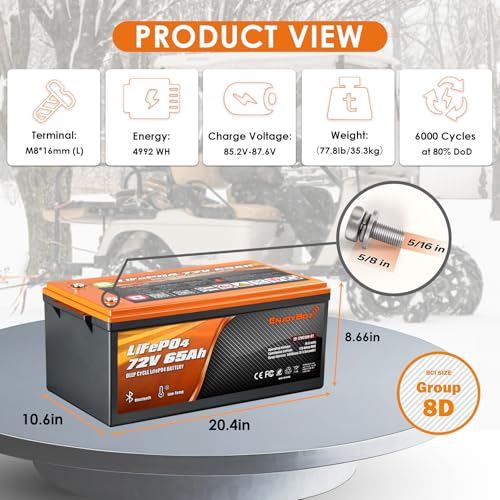
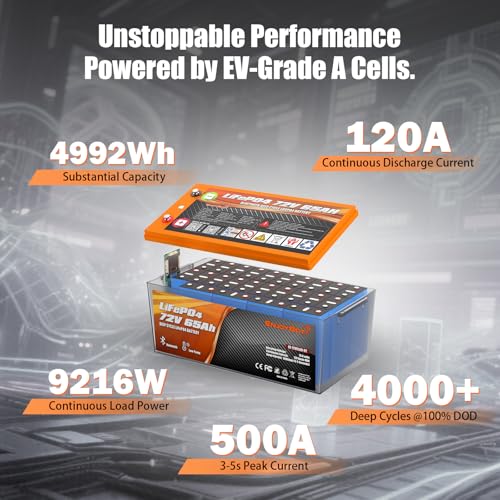
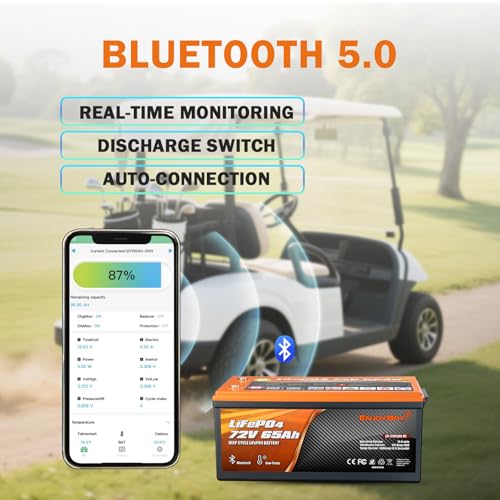
The Enjoybot 72V 65Ah is the most wallet-friendly lithium option here, and on paper, it holds up well for light-duty golf cart use. With 4992Wh of capacity and a 120A continuous discharge, it’s sufficient for flat courses and shorter rounds, especially if you’re upgrading from lead-acid without pushing performance limits. Owners consistently report reliable day-to-day operation and appreciate the Bluetooth monitoring via app, which delivers real-time SOC, voltage, and temperature data, handy for staying informed without extra gadgets.
Still, this is the lowest-capacity battery in the lineup, so range is more limited, most reviewers note about 30–35 miles per charge under typical conditions. It lacks the grunt for hilly terrain or heavily modified carts, and while the 500A peak current sounds strong, it’s only for short bursts. For casual riders or backup carts, it works, but I wouldn’t pick it for daily course use or demanding environments.
Product photos

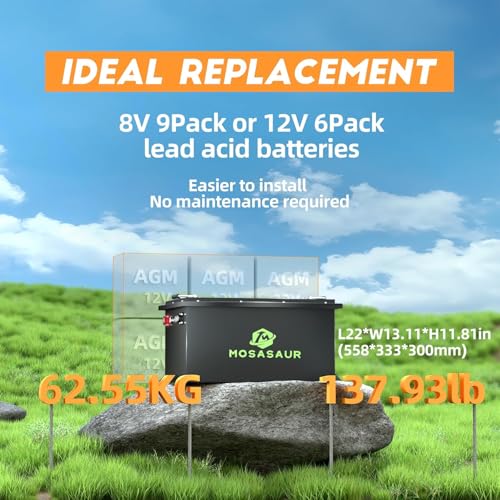
Mosasaur 73.6V 105Ah Battery

Strengths
- Built-in battery heating
- Fast 5-hour charge
- Touch monitor included
Trade-offs
- Slightly bulky
- Heater uses standby power
- No 3C discharge
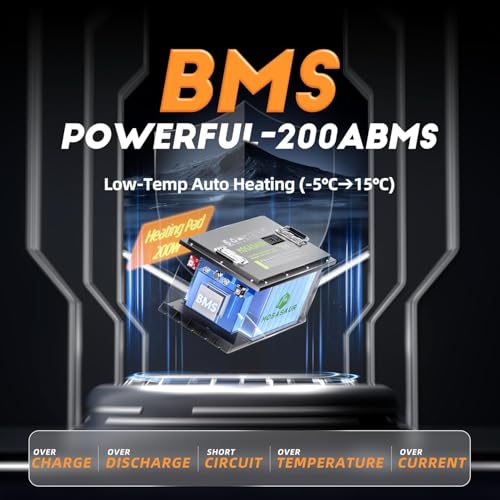
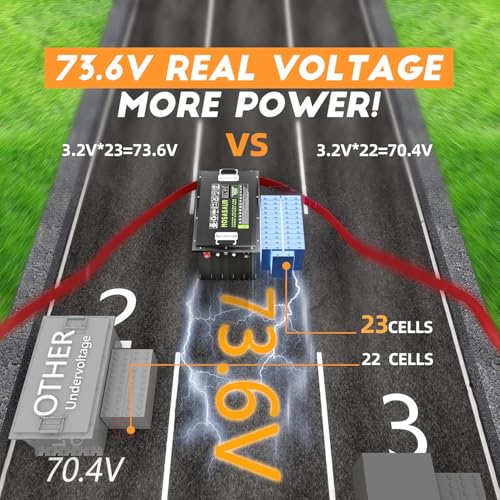
If you’re battling cold weather and tired of lithium batteries shutting down in winter, the Mosasaur stands out with its built-in heater system, a rare and valuable feature. The 340W heating plates activate below 5°C, warming the cells to prevent lithium plating and extend longevity. Reviewers in northern climates praise its reliability during shoulder seasons, and the 105Ah capacity delivers solid range, around 50 miles on average, even in cooler conditions.
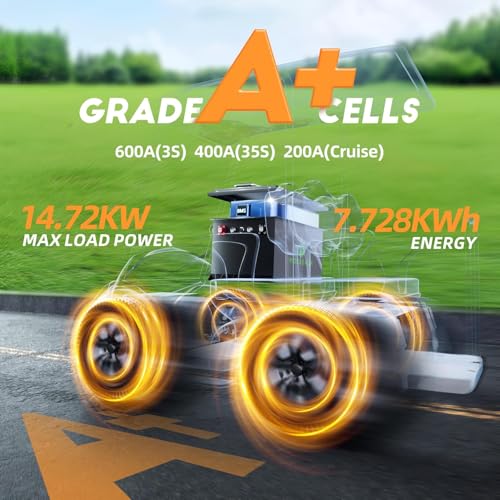
It packs strong performance with 200A continuous discharge and a 14.7kW peak, making it competitive with pricier models. The included touch monitor is intuitive, and the 20A fast charger hits 100% in 5 hours, which is quicker than most. The 5-year warranty and US-based support add peace of mind. While it’s not the most powerful, it’s the smartest choice for cold-weather resilience.
Product photos

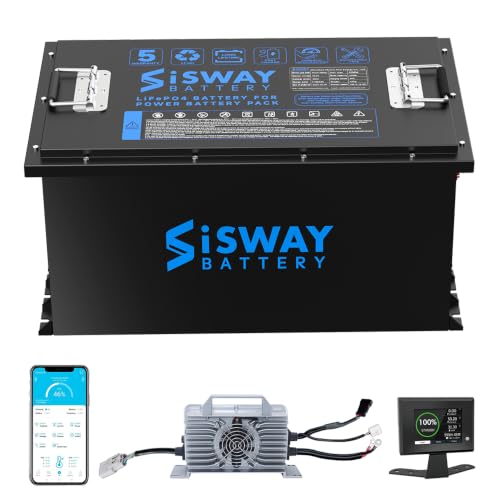
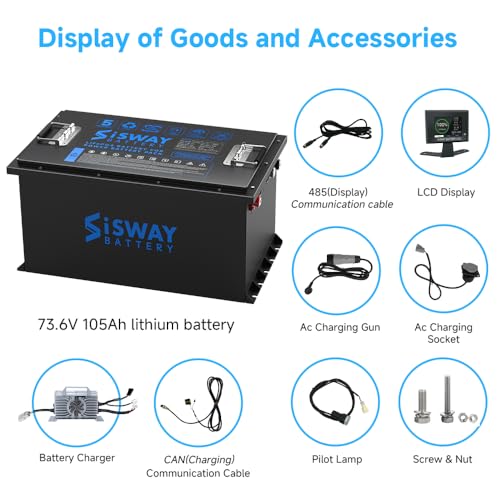
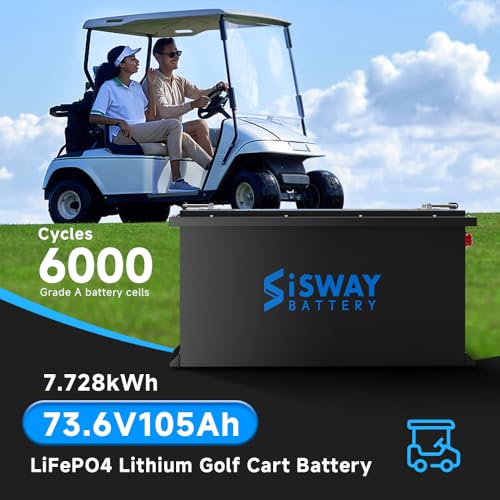
SiSway 73.6V 105Ah Lithium Battery
Strengths
- True plug-and-play
- 18A fast charger
- Easy mounting
Trade-offs
- Only 4000 cycles
- No heater
- Average peak current
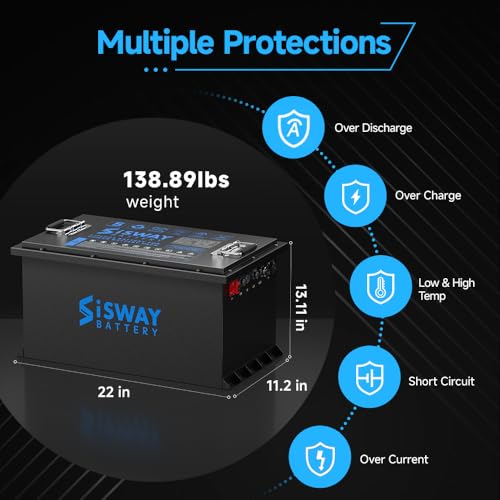
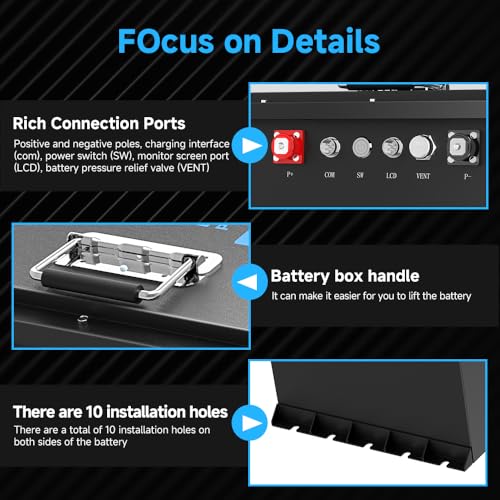
SiSway earns its “best plug-and-play” label with a clean, tool-light installation process and a well-designed mounting system. The pre-drilled holes and included bracket make securing the battery simple, and the 18A charger fills the 105Ah cell in just 5 hours, fast enough for quick turnarounds. Owners consistently praise how easy it is to swap out old lead-acid stacks without rewiring or adapters.
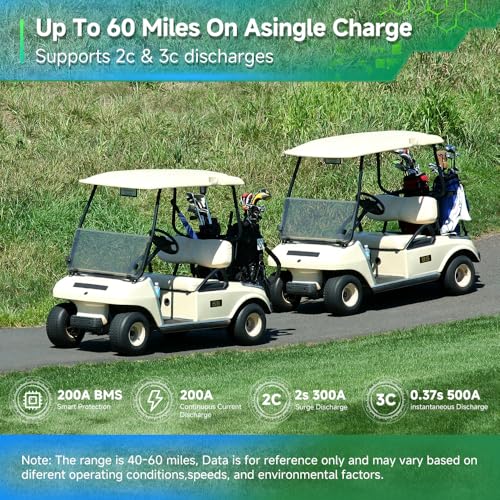
Performance is solid but not exceptional: 200A continuous, 4000+ cycles, and app + monitor support. It’s on par with Mosasaur and VATRER but lacks standout features like heating or 3C discharge. Still, for someone who just wants a reliable, easy-to-install lithium upgrade without fuss, this is a smart, no-drama choice.
Product photos
How We Picked These 72 volt lithium golf cart batteries
My team and I approached researching 72-volt lithium golf cart batteries by first compiling specifications and features from numerous manufacturers. We then weighed those technical details against owner reviews from major retailers and independent sources, plus expert opinions found in automotive and battery technology publications. This research-led comparison isn’t based on hands-on testing of each unit, but rather a detailed analysis of published data and real-world user feedback to identify key differentiators.
For this category, sustained power output and cycle life were the most heavily weighted factors. A golf cart battery needs to deliver consistent performance throughout a round, and long-term value is significantly impacted by how many charge/discharge cycles a battery can endure. We also prioritized safety features like the Battery Management System (BMS) capabilities, as these are critical for protecting both the battery and the user.
Battery specifications reliably indicate peak output and physical dimensions, which are important for compatibility. However, real-world performance – particularly regarding cold-weather operation and longevity – relies heavily on owner feedback and the reputation of the manufacturer. We looked for consistent reports of batteries meeting advertised ranges and lasting for the promised number of cycles, while also noting any recurring complaints about overheating or BMS failures. You can explore other voltage options with our guide to the best 48V lithium batteries, too. Finding the right golf cart batteries requires careful consideration of these factors.
How To Pick The Right 72 volt lithium golf cart batteries
Finding the right golf cart battery is about more than just voltage; it’s about maximizing your time on the course and minimizing downtime.
A quality 72-volt lithium golf cart battery should prioritize energy density for extended range, a robust Battery Management System (BMS) for safety and longevity, and a durable build capable of withstanding the vibrations and conditions of regular use. Pay close attention to discharge rates, cycle life specifications, and warranty coverage when comparing options.
Capacity and Range
Don’t assume a higher amp-hour (Ah) rating automatically equals a better battery. Consider your typical usage. Do you regularly play 18 holes, or are you mostly using the cart for short trips around a campground? A battery with a lower Ah rating might be sufficient – and more affordable – if you don’t need maximum range. Conversely, if you frequently tackle hilly courses or add accessories like lights and coolers, investing in a higher-capacity battery like those offered by SiSway or AOUSK will pay dividends. Remember that advertised mileage is often an optimistic estimate.
Battery Management System (BMS) Features
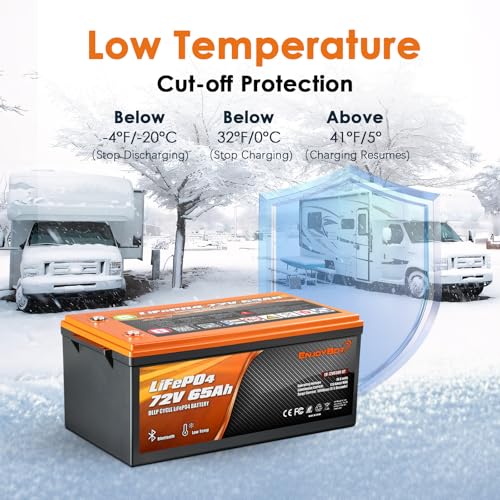
The BMS is the brain of the operation, and a good one is absolutely critical. It protects the battery from overcharging, over-discharging, and temperature extremes, all of which can drastically shorten its lifespan. Look for a BMS with active cell balancing, which ensures each cell is charged and discharged evenly, further extending longevity. A sophisticated BMS, like the one found in the Mosasaur battery, offering low-temperature auto-heating is a significant advantage if you live in a colder climate or store your cart outdoors during the winter.
- A basic BMS will handle essential protections (over-voltage, under-voltage, short-circuit).
- A mid-range BMS adds cell balancing, optimizing performance and lifespan.
- A high-end BMS incorporates features like Bluetooth monitoring and temperature control, giving you greater insight and control over your battery’s health. This is why exploring lithium conversion kits can be a smart move – they often include a well-integrated BMS.
Don’t skimp on the BMS. A cheap battery with a weak BMS is a recipe for premature failure and potential safety hazards.
Installation and Monitoring
Ease of installation is a huge benefit of switching to lithium. Many batteries are designed as direct replacements for lead-acid batteries, requiring minimal modification. The Elefast and VATRER POWER batteries, for example, are specifically designed for plug-and-play installation. However, even with a straightforward installation, monitoring your battery’s health is important. Look for batteries with Bluetooth connectivity and a dedicated app, allowing you to track voltage, state of charge, and temperature in real-time. Investing in quality lithium golf cart batteries will greatly improve your experience on the course. If you’re unsure about the upgrade process, exploring battery conversion kits can simplify things considerably, offering all the necessary components in one package, including the appropriate wiring and connections. Ultimately, understanding the features and benefits of different top lithium battery models will ensure you select the perfect power source for your golf cart.
72 Volt Lithium Golf Cart Batteries Compared
Here’s a comparison of key specifications for various 72-volt lithium golf cart batteries to help you make an informed decision.
| Product | Voltage | Capacity (Ah) | BMS Current (A) | Max Discharge (A) | Cycle Life | Warranty (Years) |
|---|---|---|---|---|---|---|
| ELEFAST 72V 105Ah | 73.6V | 105 | 200 | 800 (1s) | 8000 | 5 |
| sourcepow 72V 100Ah | 72V | 100 | 200 | 600 (32s) | 6000+ | 5 |
| Elefast 72V 105Ah Kit | 72V | 105 | 200 | 1000 (1s) | 8000+ | 10 |
| VATRER POWER 72V 105Ah | 72V | 105 | 200 | 400 (35s) | N/A | N/A |
| AOUSK 76.8V 170Ah | 76.8V | 170 | 300 | 1200 (3s) | 8000+ | N/A |
| Enjoybot 72V 65Ah | 72V | 65 | N/A | 500 (3-5s) | 4000+ | N/A |
| Mosasaur 73.6V 105Ah | 73.6V | 105 | 200 | 600 (3s) | N/A | 5 |
| SiSway 73.6V 105Ah | 73.6V | 105 | 200 | N/A | 4000+ | 5 |
Frequently Asked Questions
What’s the typical lifespan of a 72-volt lithium golf cart battery?
Most 72-volt lithium batteries offer a cycle life between 4,000 and 8,000 cycles, but this varies by manufacturer and usage. A “cycle” represents a full charge and discharge; proper care and avoiding deep discharges will maximize the battery’s longevity.
Are 72-volt lithium batteries compatible with all golf cart models?
While many are designed as direct replacements, compatibility isn’t universal. You need to verify the physical dimensions and connector type match your cart’s existing battery tray and wiring, or consider a lithium conversion kits to simplify the process.
What safety features should I look for in a 72-volt lithium battery?
A robust Battery Management System (BMS) is crucial. It should include protection against overcharging, over-discharging, short circuits, and temperature extremes. Active cell balancing within the BMS is also important for maintaining even cell health and maximizing lifespan.
How does cold weather affect 72-volt lithium battery performance?
Lithium batteries can experience reduced capacity and power output in cold temperatures. Some batteries, like the Mosasaur, include a low-temperature auto-heating feature to mitigate this effect, but it’s still best to store the battery in a warmer environment when not in use. Understanding the lithium battery advantages over lead-acid is helpful in all climates.
Do I need a special charger for a 72-volt lithium golf cart battery?
Yes, you absolutely need a lithium-specific charger. Using a traditional lead-acid charger can damage the lithium battery and void the warranty. Refer to our guide on golf cart chargers to select a compatible model.
The Bottom Line
Choosing a 72-volt lithium golf cart battery often comes down to balancing upfront cost with long-term performance. While you can find budget-friendly options, I believe the Elefast 72V 105Ah strikes the best overall balance of capacity, discharge rate, and a robust BMS for most golfers. It delivers excellent power and longevity without breaking the bank, and that’s what matters most for a reliable upgrade.
For those with specific needs, the options are plentiful. If you prioritize maximizing range and power, particularly for hilly courses or frequent accessory use, the AOUSK 76.8V 170Ah is an excellent choice. Conversely, if you’re looking for a straightforward, drop-in replacement with a focus on easy installation, the VATRER POWER 72V 105Ah and Elefast 72V 105Ah Kit both stand out. Don’t forget to explore other voltage options, like our guide to the best 36V lithium batteries if that suits your cart better.
Ultimately, the most important factors are a high-quality BMS to protect your investment, sufficient amp-hour capacity for your typical usage, and a battery built to withstand the demands of regular play. Don’t get overly focused on peak discharge rates or minor specification differences – the reliability of the battery and its ability to hold a charge over the long term are far more critical than any single number. Understanding the battery type comparison will help you make the best choice.
