
What Is a Counterbalanced Putter | The 12% Face Angle Edge
This post contains affiliate links. As an Amazon Associate, we earn from qualifying purchases.
This post contains affiliate links. As an Amazon Associate, we earn from qualifying purchases.
A counterbalanced putter is a heavier golf club with extra mass in both the head and the grip end, shifting the balance point closer to your hands. This design uses a longer shaft (typically 36-38 inches) and a head weight of 360-400 grams to promote stability and a smoother, more pendulum-like stroke, particularly for golfers who struggle with twitchy hands or inconsistent tempo.
The 12% figure isn’t marketing. A 2023 study in the Journal of Sports Sciences found golfers using these putters showed a 12% improvement in face angle consistency. That’s the measurable edge, keeping the putter face square to your line longer. But that edge has a cost in feel and requires a specific type of stroke to unlock.
What follows is a breakdown of the exact specs, the objective data on whether they actually make more putts, and the two-week adjustment period that most articles skip. By the end, you’ll know if your putting problems are the kind a counterbalanced design can fix, or if you’re better off with a standard putter length.
Key Takeaways
- Counterbalancing raises a putter’s balance point, making it harder to twist during the stroke. The trade-off is muted feedback on strike quality.
- Objective lab testing by MyGolfSpy found no overall performance advantage in makes or accuracy for their test group, these are not miracle sticks.
- They are ideal for golfers with inconsistent tempo, shaky hands, or a straight-back, straight-through stroke. They fight arc-style strokes.
- Expect a 2-3 week adjustment period to recalibrate distance control, especially on long lag putts.
- The longer 38-inch shafts often do not fit in standard travel bags, a practical headache most reviews miss.
The Core Design: Weight, Length, and Feel
Forget the vague term “stability.” A counterbalanced putter achieves its feel through three concrete, measurable changes you can see on a spec sheet.
The head weight jumps from a standard 330-350 grams to 360-400 grams. To balance that heavy head, manufacturers add mass above your hands. They do this with a longer shaft, 36 to 38 inches is the norm, and a heavier grip, often 15-17 inches long and weighing 120 grams or more. This combo moves the club’s balance point from near the head to roughly the middle of the shaft.
A counterbalanced putter shifts its balance point up the shaft, closer to the golfer’s hands. This configuration increases the club’s moment of inertia (MOI), making it more resistant to twisting during the stroke, which can promote a smoother, more pendulum-like motion.
This is the broom analogy. Hold a broom by the very end of the handle and the bristles wobble. Choke up on the handle, moving your hands closer to the mass, and it’s easier to control. The putter works the same way.
The feel change is immediate and specific. The stroke feels heavier to start, smoother through motion, and quieter in the hands. You lose the sharp “click” feedback of a standard blade. A tester for MyGolfSpy noted the counterbalanced Odyssey Ai-ONE Jailbird Cruiser felt calmer but offered less feedback on strike quality. That’s the trade.
| Specification | Standard Putter | Counterbalanced Putter |
|---|---|---|
| Head Weight | ~330–350 grams | ~360–400 grams |
| Shaft Length | 33–35 inches | 36–38 inches |
| Grip | 10–11 inches, 60–85 grams | 15–17 inches, 120+ grams |
| Balance Point | Lower in shaft, near head | Mid-shaft, closer to hands |
| Primary Feel | Lighter, more head feedback | Heavier, steadier, muted feedback |
The short version: It’s a heavier, longer club that dampens hand action. Whether that’s helpful or deadening depends entirely on your stroke.
Who Wins? Counterbalanced vs. Standard
The sales pitch is smooth consistency. The lab data tells a more nuanced story.
MyGolfSpy’s equipment lab tested three identical Bettinardi putters (BB1, BB32, BB55) in both standard and counterbalanced versions. Their findings are a necessary reality check. The difference in make percentage between the two types was inconclusive. For overall accuracy, the data showed “no practical advantage.” Their conclusion was blunt: “using a counterbalanced putter will not magically make any golfer a better putter.”
So why do tour pros like Wyndham Clark win majors with them? And what about the 12% face-angle consistency boost from the Journal of Sports Sciences study?
The answer is in the fit. The design solves specific problems. It doesn’t create universal improvement.
Ideal for:
- Golfers with the yips or shaky hands: The extra mass quiets small, nervous movements.
- Players with inconsistent tempo: The heavier club is harder to jerk back, promoting a smoother transition.
- Taller golfers needing longer putter length: The 38-inch option can improve posture.
- Straight-back, straight-through strokes: Works best with face-balanced mallet putters.
Not ideal for:
- Players with a strong arc stroke: The design fights natural rotation.
- Golfers reliant on sharp feel: You’ll miss the feedback.
- Travelers: The longer shaft is a nightmare for standard travel bags.
- Anyone expecting an automatic fix: As the Golfweek equipment analysis notes, buying the wrong one is an expensive mistake.
Where this goes sideways: Assuming a counterbalanced putter is just a heavier standard putter. The balance point change alters the entire lever, demanding a grip change and a 2-3 week adjustment in tempo.
If your miss comes from face rotation, look at putter face insert technology or a zero-torque design. If your miss comes from a twitchy, inconsistent path, then counterbalancing is the targeted solution.
How to Actually Use One (The Grip is Everything)
You cannot use this club like your old one. The most common mistake is gripping it in the same place, which nullifies the counterbalancing effect and turns it into just a clumsy, heavy putter.
- Grip Higher. Place your hands further up the grip, near the butt end. You should immediately feel the weight in your palms, not your fingers.
- Let the Weight Swing. Initiate the stroke with your shoulders. Do not try to lift the clubhead or manipulate it with your wrists. The mass wants to swing like a pendulum, let it.
- Practice Speed, Not Line. Your first few sessions should focus entirely on lag putting. The heavier head changes momentum, so your old feel for distance will be wrong. Sam Goulden of Tour Quest Golf states most players need “a 2-3 week adjustment period to recalibrate touch and tempo.”
- Check Your Putter Loft and Lie. The longer shaft and different hand position can alter how the sole sits. If the toe or heel is up, you’ve changed your effective lie angle.
This isn’t a plug-and-play club. It’s a tool that requires a specific technique. If you fight it, it will fight back.
Popular Models and Their Real Jobs
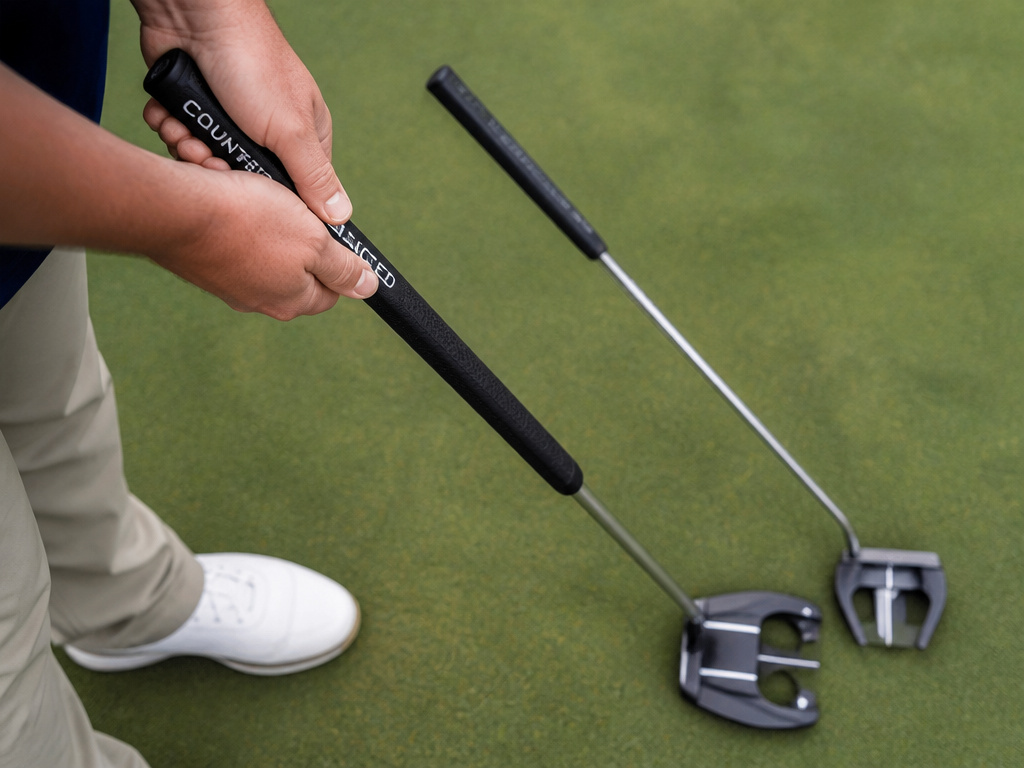 A category name isn’t a recommendation. Here are specific models and what they’re built to do.
- TaylorMade Spider CB: The 380-gram head and 38-inch shaft make it a stability monster. It’s for the player who wants all feel of wrist action removed. The high MOI mallet shape forgives off-center hits.
- Odyssey Stroke Lab Ten CB: The 370-gram head is paired with Odyssey’s lightweight Stroke Lab shaft to redistribute weight. The 17-inch grip is a hallmark. It’s designed for a smoother tempo, and its alignment aids are among the best in class.
- Bettinardi Inovai 6.0 CB: At 400 grams, this is one of the heaviest. It’s for the player who wants maximum steadiness and prefers the milled-metal feedback of a Bettinardi face.
- Scotty Cameron Futura X7M CB: The 375-gram head offers Cameron’s premium feel in a counterbalanced package. It suits the golfer who wants tour-proven stability without a complete departure from traditional craftsmanship.
These aren’t just longer versions of standard putters. Each uses its weight distribution to promote a different kind of stroke consistency. Trying them is the only way to know which feel matches your flaw.
Frequently Asked Questions
Are counterbalanced putters legal?
Yes. They are fully legal under the Rules of Golf (USGA Rule 10.1b). The 2016 anchoring ban prohibited bracing the club against the body, not swinging a longer, heavier club freely. A counterbalanced putter never touches the chest or belly.
What’s the difference between counterbalanced and zero-torque putters?
This is a critical distinction. A counterbalanced putter adds weight to quiet hand and tempo issues. A zero-torque putter is engineered to reduce face rotation, helping you start putts on line. They look similar but solve different problems. The Golfweek equipment analysis clarifies that buying the wrong one won’t fix your putting.
Can I convert my current putter to counterbalanced?
Technically, yes. You can add a weight plug under the grip and possibly a heavier headweight. But you’ll also need a longer shaft to truly raise the balance point. The cost and fitting complexity often make it more practical to buy a designed model. You’ll also need to understand your current putter toe hang to ensure compatibility.
Do any tour pros use counterbalanced putters?
Yes. Wyndham Clark won the 2023 U.S. Open with a counterbalanced Odyssey Jailbird. Viktor Hovland, Rickie Fowler, and Keegan Bradley have also used them in victories. They are a legitimate tour option, not a gimmick.
Are they good for beginners?
They can be, but with a caveat. The stability can help a new golfer develop a shoulder-driven stroke with less wrist breakdown. However, starting with such a specific, feel-dampening tool might mask developing flaws. A more forgiving standard putter for beginners is often a better first choice.
The Bottom Line
A counterbalanced putter is a specialized tool, not a universal upgrade. It offers a proven, 12% edge in face-angle consistency for golfers whose primary enemy is a twitchy, tempo-driven stroke. The cost is feel, a mandatory grip change, and a few weeks of relearning distance control.
Ignore the marketing that claims it’s a magic wand. Ground your decision in the lab data and the specific models: the TaylorMade Spider CB for pure stability, the Odyssey Stroke Lab Ten CB for tempo, the Bettinardi for heaviest feel, the Scotty Cameron for premium execution. Test them knowing you’re not just picking a putter, you’re choosing a stroke style. If your hands are the problem, this might be the fix. If your issue is face rotation, look at your putting grip or a zero-torque design instead.
