
How to Hit from a Downhill Lie for Solid Contact & Accuracy
This post contains affiliate links. As an Amazon Associate, we earn from qualifying purchases.
This post contains affiliate links. As an Amazon Associate, we earn from qualifying purchases.
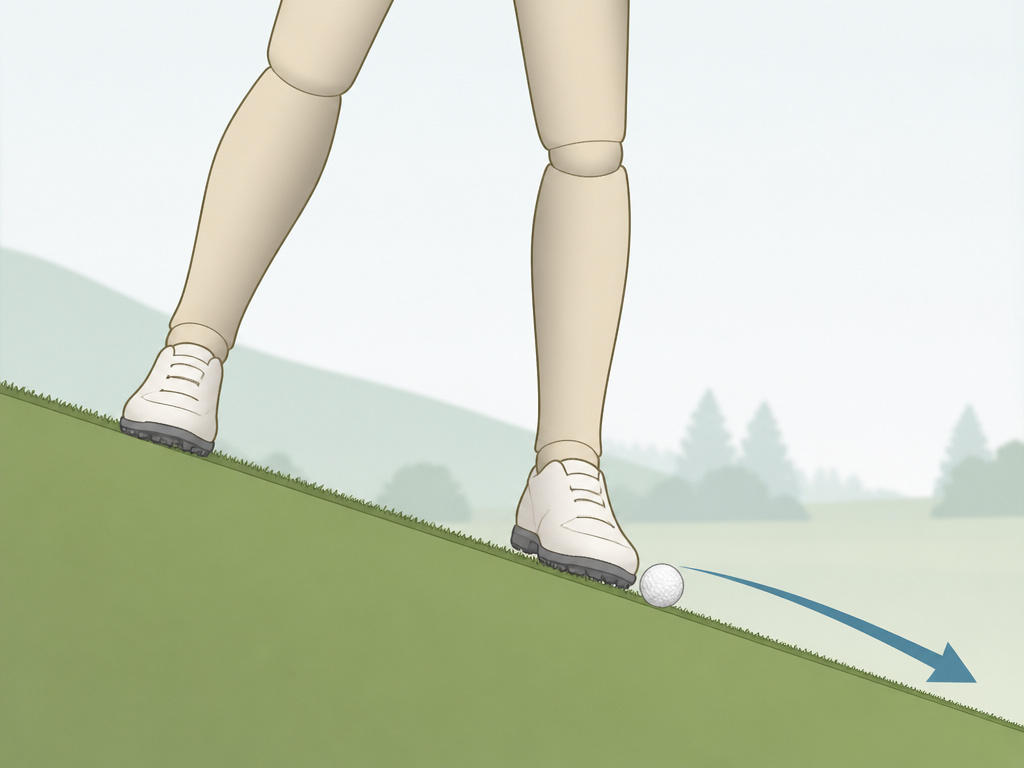
To hit from a downhill lie, match your shoulders to the slope, move the ball back an inch or two, and grip down on the club. For a right-handed golfer, aim five yards left with a short iron and up to ten yards left with a longer club. The slope delofts the club, so the shot will fly lower and farther, don’t fight it by trying to lift the ball.
That five-yard aim adjustment isn’t a guess. It’s the quantifiable edge that separates a shot finding the green from one trickling into a bunker. The slope changes your relationship to the target line in a predictable way, and your setup has to correct for it before you ever take the club back.
What follows is the physical checklist: how to set your body to the hill, where to put the ball, and the one swing key that keeps you from hitting it thin. We’ll also untangle the one piece of advice where top instructors genuinely disagree.
Key Takeaways
- Aim left (for righties) to compensate for the slope’s pull. Start with a five-yard adjustment for a short iron and increase it with longer clubs.
- Set your shoulders parallel to the ground beneath your feet. This is the single most important alignment fix.
- Grip down about an inch on the club to maintain control and balance as the slope pushes you forward.
- Expect a lower, longer ball flight. The hill delofts your club; trying to help the ball up is the most common cause of a thin or fat miss.
- Swing along the slope, not against it. A low, long takeaway prevents you from rushing and helps you move your weight correctly through impact.
Why Downhill Lies Are a Different Game
A flat lie lets you swing around a centered axis. A downhill lie tilts your entire world. Your feet are above the ball, your weight wants to fall toward the target, and the club’s effective loft disappears.
A downhill lie effectively delofts the clubface at address. A 7-iron can deliver the loft of a 5-iron, producing a lower, hotter ball flight that will carry farther than your normal distance.
This isn’t just theory. Watch any tournament at a course like Augusta National, where fairway contours are severe. Players aren’t just making swings; they’re solving geometry problems in real time. The lie angle of your club, which is designed for level ground, is now working against you. Understanding this mechanical shift is the first step to managing it.
The Core Setup Adjustments (Aim, Ball, Grip)
You cannot rescue this shot with your swing. The work is done before you start the takeaway. Get these three things right, and the swing becomes a simple reaction to a good position.
Shoulders Follow the Ground
Forget the horizon. Your lead shoulder (left for right-handers) must be lower than your trail shoulder, matching the angle of the slope under your feet. If you keep your shoulders level to the horizon, you’ve guaranteed an awkward, compensating move.
The Ball Goes Back
Move the ball an inch or two back from your normal position. Most instructors, like Golf Digest’s Andrew Park, agree on this. It encourages the descending blow you need and helps you avoid hitting behind the ball. Your weight should feel anchored on your front foot, about 60-70% there.
Grip Down for Control
Choke down on the grip by about an inch. This shortens the lever, gives you more control, and helps counterbalance the feeling of being pulled down the hill. It also subtly adjusts the effective lie angle, helping the sole sit better on the slope.
| Adjustment | What To Do | Why It Works |
|---|---|---|
| Aim | Aim 5 yds left (short iron) to 10 yds left (long club) for a right-handed player. | Compensates for the slope’s tendency to pull the ball right. |
| Ball Position | Move 1-2 inches back in your stance from normal. | Promotes ball-first contact and counters the delofted club. |
| Grip | Choke down ~1 inch on the handle. | Improves balance, control, and helps the club sit properly. |
| Shoulders | Match slope angle; lead shoulder lower. | Aligns swing path with the hill, not against it. |
| Weight | 60-70% on front foot at address. | Establishes the low point of the swing ahead of the ball. |
Common mistake: Fighting the slope by leaning your shoulders back. This reverses the shoulder tilt, guarantees a thin top, and often leads to a loss of balance. Work with the hill, not against it.
The Swing Thought That Fixes Contact
With the setup locked in, the swing is about discipline, not power. The hill wants to pull you forward and make you rush. Your job is to resist that with one intentional move.
Trevor Immelman, the 2008 Masters champion, nails the key: a low and long takeaway. On a downhill lie, the instinct is to pick the club up quickly. That wrecks your turn and leaves your weight stuck on your front side. By dragging the clubhead low along the ground for the first foot of your backswing, you give yourself time to complete a full shoulder turn. This loads your weight correctly and sets up a smooth transition.
From there, swing along the slope. Your follow-through will feel lower, and your weight will finish moving down the hill. Do not try to help the ball into the air. The club is already delofted; it will launch the ball. Any attempt to scoop or lift it results in a fat chunk or a skulled rocket.
This swing thought directly helps you avoid two of the most frustrating misses in golf: topping the ball and hitting fat shots.
Downhill vs. Other Uneven Lies
 Downhill lies have a specific formula. It’s crucial not to confuse them with other common slopes, as the adjustments are different. Mixing them up is a fast way to compound errors.
Downhill vs. Uphill Lie
They are opposites. An uphill lie adds loft, so the ball flies higher and shorter. Your weight is on your back foot, and you aim right (for righties). If you use your downhill setup on an uphill slope, you’ll hit a weak pop-up.
Downhill vs. Sidehill Lie
A sidehill lie, ball above or below your feet, primarily affects direction, not trajectory. The adjustments are about grip length, stance width, and aim to counter the hook or slice spin the slope imparts. The downhill adjustment is about managing trajectory and contact first.
| Lie Type | Main Effect | Key Adjustment | Ball Flight Tendency |
|---|---|---|---|
| Downhill | Delofts club, pulls weight forward. | Shoulders match slope, ball back, aim left. | Lower, longer. |
| Uphill | Adds loft, pulls weight back. | Shoulders match slope, ball forward, aim right. | Higher, shorter. |
| Ball Above Feet | Promotes a left-to-right curve (for righties). | Grip down, aim right, stand taller. | Draw/Hook. |
| Ball Below Feet | Promotes a right-to-left curve (for righties). | Widen stance, aim left, bend knees more. | Fade/Slice. |
When to Consider a Different Shot
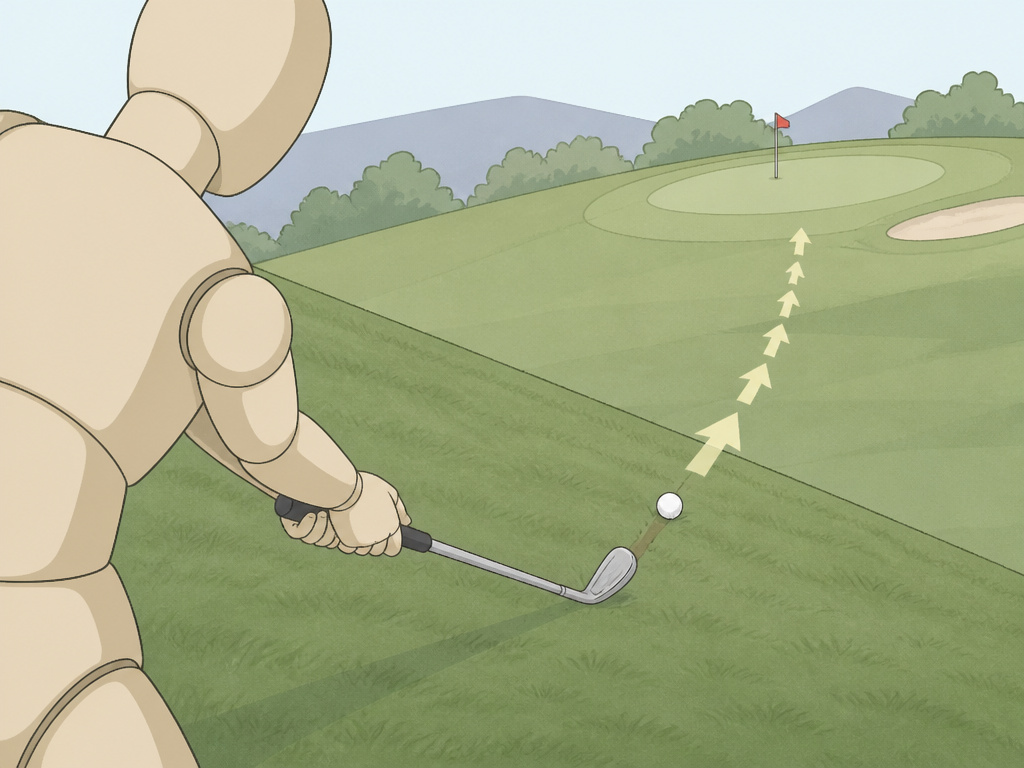 The rule in golf is to play the ball as it lies. But sometimes, a downhill lie is so severe that a standard approach shot is high-risk, low-reward. You need a backup plan.
If the slope is extreme and the green is tight, consider a low runner. Use a less-lofted club than normal, choke down, and play a abbreviated, punching swing. Think of it as a cousin to the punch shot or stinger. Let the ball land short and run onto the green. This takes the air out of the equation and uses the slope’s natural energy.
If the lie is truly unplayable, maybe the ball is on such a steep bank that you can’t take a stance, know your options under the unplayable lie rule. Taking a penalty stroke for a better lie is often smarter than attempting a miracle that leads to a bigger number.
The One Expert Disagreement (And What To Do)
Research the topic and you’ll find one clear contradiction. Most teachers, like Cathy Kim, advocate moving the ball back in your stance. However, Top 100 Teacher Brech Spradley advises placing it slightly more forward.
The reasoning behind Spradley’s view is that the ball will come out so low that a forward position helps you catch it on the upswing. For most amateurs, this is dangerous advice. A forward ball position on a downhill slope makes hitting ball-first nearly impossible and drastically increases the chance of a fat shot.
Stick with the majority consensus: move the ball back. It simplifies the goal of striking down and through. Once you’ve mastered solid contact from a standard downhill lie, you can experiment with Spradley’s method for specific situations.
Practicing Downhill Lies
You won’t find this lie on the driving range mat. You have to hunt for it.
- Find a slope: Use a practice area with uneven terrain or the side of a fairway bunker.
- Start with a wedge: Use a high-lofted club to focus on contact, not distance.
- Exaggerate the feels: Really lean into that front foot. Make your lead shoulder feel drastically lower.
- Hit half-shots: Focus on a smooth, three-quarter swing with that low takeaway. Contact is the only metric that matters.
This kind of specific practice does more for your scoring than another bucket of range balls. It builds the adaptability that leads to consistent irons no matter what the course throws at you.
Frequently Asked Questions
What club should I hit from a downhill lie?
The slope delofts the club, so the ball will fly lower and roll farther. You often need more club (e.g., a 7-iron instead of an 8-iron) to account for the lower trajectory, but expect more run-out after landing. Always take one extra club and make a smooth, controlled swing.
Why do I always top the ball on a downhill lie?
Topping it usually means you’re leaning your shoulders back to try and help the ball into the air. This moves your head and upper body away from the target, raising the low point of your swing. Keep your shoulders matching the slope and let your weight move down the hill through impact.
How much does the ball draw or fade on a downhill lie?
The primary effect is on trajectory, not side spin. A straight downhill lie won’t impart much curve. However, most downhill lies are also slightly sidehill. If the ball is also above your feet, it will want to draw; if it’s below your feet, it will want to fade. Adjust your aim accordingly.
Can I hit a driver from a downhill lie?
It’s possible but risky. The delofting effect is extreme with a driver, often producing a screaming, low bullet that’s hard to control. For most players, the smarter play is to choose a 3-wood or even a long iron for a more controllable, low punch shot that finds the fairway.
Do the rules allow me to improve my lie?
No. You must generally play the ball as it lies. You cannot kick the ball to a better spot or press down grass behind it. Your only recourse for a truly terrible lie is to declare it unplayable and take a penalty stroke for relief.
Before You Go
A downhill lie asks a simple question: will you fight the slope or use it? The players who score well accept the physics. They match their shoulders to the hill, aim left, and make a committed swing along the slope. They know the ball will come out low and hot, and they plan for it. The next time you see your ball below your feet, don’t sigh. See it as a chance to solve the puzzle. Set up with intent, trust the adjustments, and swing with the hill. That’s how you turn a trouble spot into a highlight.
